You finish a 10-hour workday, pick up the kids, cook dinner, answer one last email, and then collapse onto the couch. Sound familiar? For hundreds of thousands of working adults across Melbourne’s inner suburbs and outer communities, this is not the exception. It is the routine.
And yet, something is changing. On weekday evenings and lazy Sunday mornings, cafes in Fitzroy are quieter than usual. Studio doors in Collingwood are propped open. A growing number of busy adults are stepping away from their screens, looking for something they cannot quite name but immediately recognise when they find it, a creative escape.
Search data from Google Trends Australia shows a consistent year-on-year rise in queries such as “art classes for adults Melbourne,” “creative workshops near me,” and “mindful activities for stressed adults.” This is not a passing trend. It is a cultural shift, rooted in neuroscience, community psychology, and a growing desire to reclaim the parts of ourselves that a productivity-focused world tends to push aside.
Reasons: Why Melbourne Adults Are Choosing Creative Activities
- 74% Of Australians report moderate to high stress in daily life (Beyond Blue, 2023
- 3x increase in adult creative class enrolments across metro Melbourne since 2021
- 45 min is all it takes for creative activity to measurably lower cortisol levels (Drexel University, 2016)
The Real Reason Adults Stop Being Creative
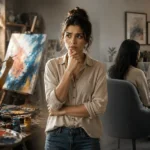
Ask any adult when they last made something purely for the joy of it, and you will often see a pause. A furrowed brow. A quiet “I used to paint in high school” or “I always wanted to try pottery.” Creativity, for most grown-ups, is something that got left behind somewhere between the first mortgage and the first promotion.
This is not a personal failing. Developmental psychologists and occupational therapists consistently point to the same culprits: time scarcity, perfectionism, social comparison, and the culturally embedded belief that creative pursuits are only legitimate if they produce something saleable or impressive. In short, adults stop creating because they have internalised the idea that making art is self-indulgent.
But the research says otherwise. Studies in art therapy, expressive arts, and positive psychology all point to creative engagement as a powerful regulator of the nervous system. When you draw, paint, throw clay, or print fabric, you shift your brain into a different mode of processing. The prefrontal cortex, responsible for planning, judging, and worrying, takes a back seat. Your default mode network, linked to spontaneous thought and emotional processing, becomes more active. The clinical term is flow state. Most people just call it losing track of time in the best possible way.
What Melbourne’s Creative Wellness Scene Actually Looks Like
Melbourne has long been regarded as Australia’s cultural capital, and the creative wellness movement fits naturally into its identity. Across suburbs like Brunswick, Richmond, St Kilda, Northcote, and the CBD fringe, a new kind of community space is emerging. Not a gym. Not a co-working hub. Something in between art school and sanctuary.
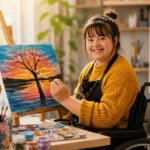
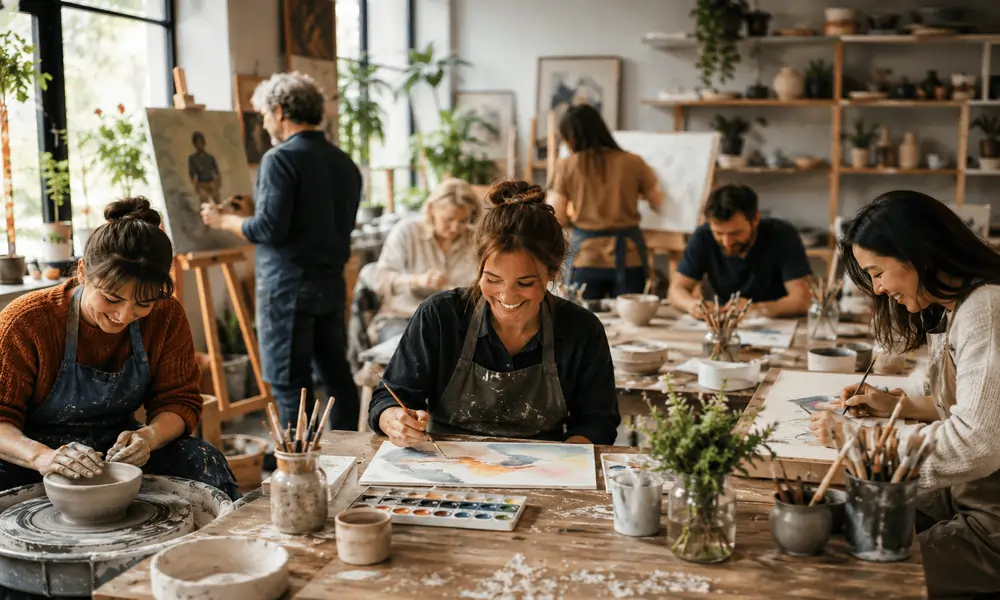
These spaces run drop-in painting sessions, introductory ceramics workshops, life drawing evenings, watercolour and ink explorations, and mindful craft circles. They are designed specifically for adults who have never studied art formally, or who have not touched a brush in decades. The emphasis is not on technical skill or producing a masterpiece. It is on the process itself, the act of making, the quality of presence it requires, and the relief it brings.
The Science of Creative Wellness
A 2016 study published in Art Therapy: Journal of the Art Therapy Association found that 45 minutes of art-making significantly reduced cortisol levels in participants, regardless of their prior experience with art. It did not matter whether someone was a trained painter or had never picked up a pencil before. The act of creating produced measurable physiological change.
More recent research from the University of Melbourne’s wellbeing research group has highlighted social creativity as a specific protective factor against loneliness and burnout. When adults engage in creative activities alongside others, the benefits compound. A shared studio session is not just art-making. It is a community. It belongs. And for many Melburnians living with the aftereffects of extended pandemic isolation, that sense of belonging is precisely what they are seeking.
“Creativity is not a talent. It is a way of operating.”
Why Group Creative Experiences Work Differently from Solo Hobbies
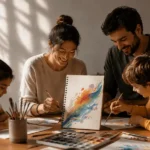
Streaming a tutorial at home and following along is one thing. Sitting in a room with six other adults, all quietly absorbed in their own work, occasionally glancing at each other’s canvases and sharing a laugh over a wobbly line, is something else entirely. Group creative experiences build what sociologists call weak social ties, the kind of low-pressure, pleasurable human connections that are surprisingly powerful for mental health and life satisfaction.
Melbourne’s inner-north and inner-west communities have a particular appetite for this kind of gathering. Locals in Thornbury, Coburg, and Yarraville consistently rank access to community arts activities among their highest lifestyle priorities, according to City of Melbourne and local council data. The demand is real, and it is growing.
Who is Actually Turning Up to These Creative Spaces?
The short answer is: everyone. But a closer look reveals some interesting patterns. The fastest-growing cohort attending adult creative art sessions in Melbourne is the 30-to-50 age group, people who are professionally established, often time-poor, and experiencing what researchers loosely describe as meaning fatigue. The sense that their days are full but somehow hollow.
Alongside them are retirees seeking new social networks and mental stimulation, carers and parents craving uninterrupted time that is genuinely theirs, and professionals in highly analytical roles, tech workers, lawyers, and accountants, looking for an outlet that engages a completely different part of their mind.
How to Find the Right Creative Escape for You
If you are reading this and feeling a quiet pull toward something like this, that feeling is worth following. Here is a practical way to think about your options.
Start with No-Commitment Cessions
Many Melbourne creative studios now offer drop-in sessions, evenings or weekend mornings that require no prior booking, no equipment, and absolutely no experience. These are ideal for adults who are curious but hesitant. You do not need to know what kind of creative activity suits you. You just need to show up once and see how it feels.
Look for Beginner-Specific Framing
The difference between a workshop framed as “art class” and one framed as “creative exploration for adults” can be significant. The former often carries associations with being evaluated. The latter signals that the experience is about participation, not performance. When searching online, look for phrases like “no experience necessary,” “beginner-friendly,” or “process-based.” These are markers of a psychologically safe creative environment.
Consider the Social Dimension
Are you looking for solitude within community, or genuine interaction? Some people love sessions where everyone works quietly with music in the background. Others prefer more conversation and laughter. Choosing the right creative space matters because the right environment improves artistic development, confidence, and emotional comfort over time. Most Melbourne studios offer different experiences, so it is worth checking the vibe through social media or a quick phone enquiry before committing.
Think About Medium, not Mastery
Watercolour painting is forgiving and meditative. Ceramics is tactile and grounding. Linocut and printmaking have a satisfying physical rhythm. Charcoal drawing rewards intuition over precision. You do not need to know which medium suits you before you try one. But knowing that each offers a different sensory and emotional experience can help you make a starting choice.
Factor in Location and Timing
For busy adults, convenience matters enormously. A brilliant studio that requires a 90-minute commute will quickly become a source of additional stress rather than relief. Melbourne is fortunate to have creative spaces distributed widely across its suburbs. Fitzroy, Prahran, Preston, Williamstown, and Ringwood all have active creative communities. Look for options close to where you live or work, and at times that genuinely fit your schedule rather than aspirationally.
Ready to Start your Creative Journey in Melbourne?
Artreach Collective offers beginner-friendly creative art workshops in Melbourne, designed specifically for busy adults who want to reconnect with their creative selves in a welcoming, no-pressure environment.
Frequently Asked Questions
Q: Do I need any artistic experience to join a creative workshop in Melbourne?
A: No. The majority of adult creative workshops in Melbourne are designed for complete beginners. Many participants have not engaged with art since primary school.
Q: What are the mental health benefits of creative activities for adults?
A: Research consistently links creative engagement with reduced anxiety and cortisol levels, improved mood, greater sense of meaning, and reduced symptoms of burnout and loneliness.
Q: How much do adult art workshops typically cost in Melbourne?
A: Prices vary depending on the studio, medium, and session length. Drop-in sessions generally range from $67 to $75, with materials often included. Multi-week courses can range from $80 to $150.
Q: What types of creative workshops are available in Melbourne for beginners?
A: Melbourne’s creative workshop scene is diverse. Common options include watercolour painting, ceramics and pottery, life drawing, printmaking, acrylic painting, collage, textile arts, and mixed media exploration.
Q: Is creative therapy different from a regular art class?
A: Yes. Art therapy is clinical and guided by a registered therapist for mental health support, while creative wellness workshops focus more on relaxation, expression, and emotional well-being through art.
The Bigger Picture: Creativity as a Life Skill, Not a Luxury
There is a growing consensus among wellbeing researchers, occupational therapists, and community psychologists that creative engagement should be treated not as an optional lifestyle upgrade for the artistically inclined, but as a fundamental human need. Much like physical movement, quality sleep, and social connection, regular creative activity appears to be a prerequisite for sustained psychological health, particularly in the high-demand, high-distraction environment that characterises modern adult life in cities like Melbourne.
The adults turning up to studios across Melbourne on Tuesday evenings and Saturday mornings are not wasting time. They are doing something quietly essential. They are remembering how to be human beings rather than just human doings.
If there is a creative version of you that has been waiting patiently in the wings, somewhere between your last job review and this morning’s inbox, this might be the moment to let them back in.
Melbourne is ready. The studios are open. And no experience is necessary.