Every parent has seen it. A teenager sits down to draw, paint, or sketch, and within minutes, they are frustrated, distracted, or simply give up. You wonder whether they actually enjoy art at all, or whether something else is getting in the way.
The truth is, artistic talent in teenagers rarely disappears. It gets buried. And one of the biggest reasons it gets buried is the environment around them.
Research on the Arts found that young people who have consistent access to supportive creative spaces are significantly more likely to continue developing their artistic skills into adulthood. The environment where a teenager creates art directly shapes how they think, how they feel about their work, and how willing they are to take creative risks.
This article breaks down exactly how the right environment nurtures teenage artistic development, what elements matter most, and how you can help the young person in your life truly flourish creatively.
Understanding Teenage Artistic Development
Before we talk about the environment, it helps to understand what artistic development in teenagers actually looks like.
Between the ages of 13 and 15, young people go through a phase of heightened self-awareness. They are simultaneously more creative and more self-critical than at any other stage of life. They care deeply about what others think, which means their confidence in sharing creative work is often fragile. A supportive and encouraging environment, such as Group Art Sessions (Ages 13–15), can help teens feel more comfortable expressing ideas, developing artistic skills, and building confidence through creativity
During this period, teenagers are developing what psychologists call creative identity, which is the belief that they are capable of making meaningful art. This identity is not fixed. It is shaped by every experience they have around art, including who is watching, what feedback they receive, and whether the space they create feels safe or stressful.
A 2022 study published in the Journal of Adolescent Development found that teenagers who described their creative environment as supportive were three times more likely to persist through artistic challenges compared to those who felt judged or rushed. That is a powerful number, and it tells us something important: the environment does not just support development. In many cases, it determines whether development happens at all.
The Key Elements of a Supportive Creative Environment
So what actually makes an environment good for teenage artistic growth? It comes down to several interconnected factors that work together to build confidence, skill, and creative thinking.
Physical Space and Sensory Comfort
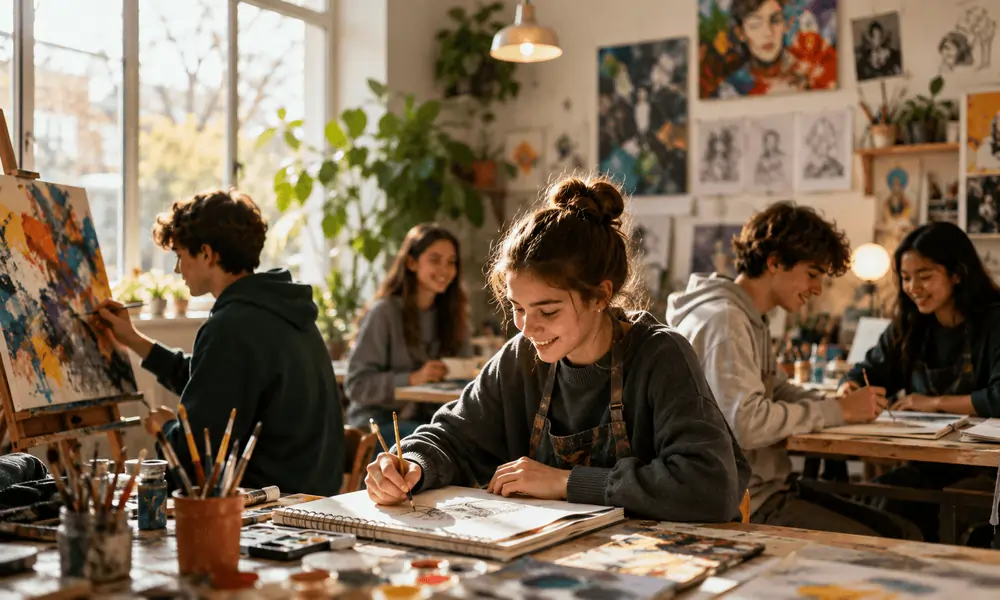
The physical setting where a teenager creates art has a measurable impact on their output and mindset. Natural light, adequate workspace, organised materials, and minimal clutter all contribute to a sense of calm that allows creative thinking to flow more freely.
When teenagers create in chaotic or uncomfortable spaces, their nervous systems stay in a mild state of alert. This is not a dramatic stress response. It is a background hum of tension that quietly drains the creative energy they need for artistic exploration.
Dedicated creative spaces, even simple ones, send a message to the teenager that their art is valued. That message matters enormously during adolescence.
Emotional Safety and Permission to Experiment
One of the most underrated elements of creative development is psychological safety. Teenagers need to know they can make something imperfect, strange, or experimental without being laughed at or criticised harshly.
Art education researchers call this the permission to fail forward. When teenagers are given genuine permission to try things that might not work, their creative range expands dramatically. They start to take risks with colour, composition, technique, and storytelling that they would never attempt in a high-pressure environment.
In contrast, environments where perfection is expected tend to produce technically cautious young artists who rarely develop a distinctive voice. They learn to copy what works rather than discover what is uniquely theirs.
Access to Skilled and Encouraging Mentors
Mentorship is one of the most powerful accelerators of artistic development in teenagers. Having a skilled adult who takes their work seriously, offers constructive feedback, and helps them see their own growth changes how young people relate to their creative practice.
Good mentors do not just teach technique. They help teenagers understand that art is a process, not a performance. They normalise struggle and help young artists stay curious even when progress feels slow.
A 2019 Arts report found that teenagers who had regular access to a creative mentor were 40 per cent more likely to describe themselves as artists by the time they finished school. Mentorship builds creative identity in a way that formal instruction alone cannot.
Peer Community and Shared Creative Culture
Human beings are social learners, and teenagers are especially so. When young artists are surrounded by peers who are also engaged in creative work, something remarkable happens. They start to push each other forward.
Watching a peer try a new technique, share a work in progress, or talk openly about what they are struggling with permits teenagers to do the same. A community of creative peers reduces the isolation that many young artists feel and replaces it with a sense of belonging.
This is one reason structured art programmes and creative collectives produce better outcomes than solo practice alone. The social dimension of creativity is not a nice bonus. It is a core driver of artistic growth.
How the Environment Shapes Creative Thinking Skills
The benefits of a supportive creative environment go far beyond the art itself. When teenagers develop within the right conditions, they also build cognitive and emotional skills that serve them across every area of life.
Creative environments that encourage experimentation strengthen divergent thinking, which is the ability to generate multiple solutions to a single problem. This is a skill that employers, universities, and researchers consistently identify as one of the most valuable capabilities a young person can develop.
Artistic development in a supportive setting also builds emotional regulation. When teenagers learn to sit with the discomfort of an unfinished piece, rework something that is not quite right, or accept feedback without shutting down, they are practising skills that directly translate to resilience in school, relationships, and work.
Studies have shown that students who participate in sustained arts programmes show measurable improvements in creative problem solving, critical thinking, and collaborative communication. These are not soft skills. They are foundational human capabilities that flourish when the environment is right.
What Gets in the Way of Artistic Development
Understanding the barriers is just as important as understanding the enablers.
Many teenagers abandon their creative practice not because they lack talent but because their environment works against them. Common barriers include lack of time due to academic pressure, absence of materials or workspace, negative feedback from peers or family, and limited access to mentors or structured programmes.
Cultural messages also play a role. Teenagers who grow up hearing that art is not a real career, or that creative pursuits are less valuable than academic achievement, often internalise those messages and begin to underinvest in their artistic development before they ever discover what they are capable of.
Schools can also inadvertently create unhelpful environments by focusing almost exclusively on technical correctness or exam outcomes rather than creative exploration and personal expression. When art class feels like a test, it stops feeling like art.
Practical Ways to Create a Better Creative Environment at Home
You do not need a studio or a large budget to build a supportive creative environment for the teenager in your life.
Start by carving out a consistent space, even a corner of a room, where their art materials are accessible, and their work in progress can be left out without being disturbed. This signals that their creative work has a rightful place in the home.
Make time for creative work without framing it as productive in the traditional sense. Resist the urge to ask what their art is for or whether it is good. Instead, ask what they are experimenting with, what they are enjoying, or what they want to try next.
Engage with their creative interests genuinely. Visit galleries, watch documentaries about artists, or look up the techniques they are exploring. When teenagers feel that the adults around them are genuinely curious about their creative world, it reinforces that their artistic development matters.
And when possible, connect them with peers and mentors who can provide the kind of specialised, encouraging support that a general school environment often cannot.
Frequently Asked Questions
Q: At what age should teenagers start formal art education?
A: Around 12 to 14 is a good starting point, but the environment matters more than the age.
Q: Can teenagers develop art skills without formal training?
A: Yes. Self-directed learning and peer communities help, but mentorship speeds up growth significantly.
Q: How do I know if the environment is holding my teenager back?
A: Watch for creative avoidance, reluctance to share work, or sudden disinterest in art they once loved.
Q: Does art development help teenagers outside of a creative career?
A: Absolutely. It builds resilience, critical thinking, and confidence that carry into every area of life.
Q: Is peer community important for young artists?
A: Very much so. Teenagers who create alongside supportive peers develop faster and stick with it longer.
Helping Teenagers Find the Right Creative Space in Melbourne
Melbourne has long been recognised as one of Australia’s most vibrant creative cities, with a strong tradition of supporting young artists through community programmes, galleries, and specialised creative education.
For families in Melbourne looking to connect their teenager with a genuinely supportive artistic environment, Artreach Collective offers structured creative programmes and art therapy classes designed around exactly the principles explored in this article, including skilled mentorship, peer community, and a culture of experimentation over perfection.
Whether your teenager is just beginning to explore their creative voice or looking to deepen an existing practice, taking the step to find the right environment could be one of the most meaningful investments you make in their development.
Because when the conditions are right, creativity does not just survive in teenagers. It thrives.