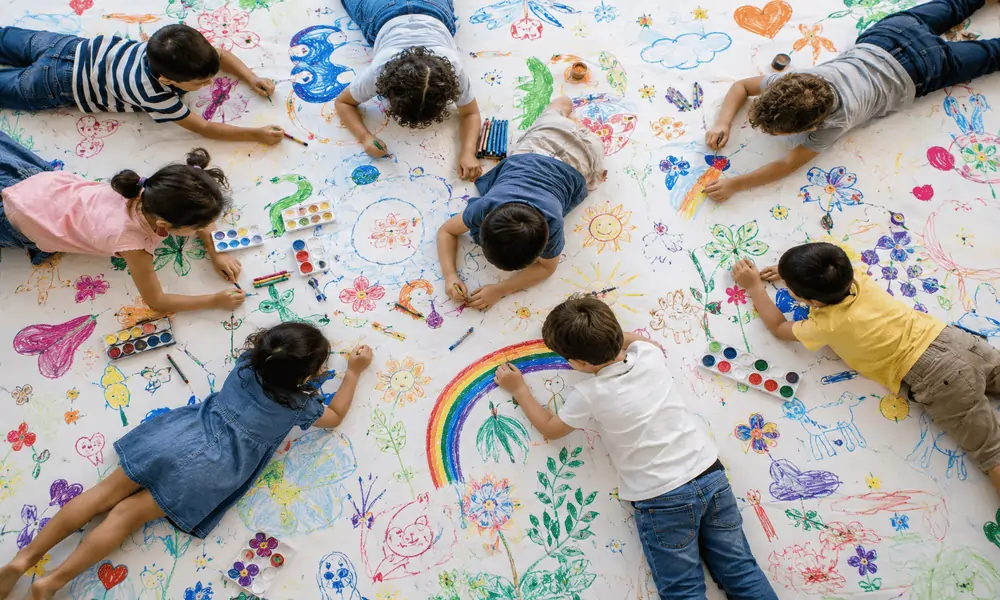
If your child has been struggling with anxiety, emotional problems, or just finding it hard to talk about their feelings, you are not alone. Many parents in Melbourne face the same challenge every single day. Kids often cannot find the right words to explain what they are going through inside. That is where art therapy steps in.
Art therapy for kids is not just about painting pretty pictures. It is a real, evidence-based approach that helps children express emotions, manage stress, and build confidence in a safe and creative environment. Whether your child is dealing with school pressure, social struggles, trauma, or developmental challenges, creative arts therapy can open doors that talking alone sometimes cannot.
In this complete guide, you will find everything you need to know as a parent. From what art therapy actually is, to how much it costs in Melbourne, what activities are involved, and when it might be the right choice for your child.
What Is Art Therapy and How Is It Different from an Art Class
This is one of the first questions parents ask, and it is a great one.
An art class teaches technique. Your child learns how to draw a straight line, mix colors, or follow a pattern. That is wonderful for skill building, but it is not the same as art therapy.
Art therapy is guided by a trained therapist who uses creative activities as a tool for emotional healing and mental wellness. The focus is not on the final artwork. It is on what the process of creating reveals about how a child is feeling, thinking, and coping.
A registered art therapist like Artreach Collective in Australia holds qualifications in both counselling or psychology and the arts. They observe how your child approaches a task, what colors they choose, how they respond to challenges, and use all of that information to support emotional growth.
Think of it this way. When a child draws a dark storm cloud over a tiny house again and again, a trained therapist understands what that image might mean emotionally and uses it as a starting point for healing conversations. Through professional art programs for children in Melbourne, children get a safe and creative space where they can explore their feelings, express their thoughts, and build emotional confidence with expert guidance.
The Real Benefits of Art Therapy for Children
Research consistently shows that creative therapies have a measurable positive impact on children’s mental health and emotional wellbeing. Here are the key benefits that parents in Melbourne should know about.
Emotional expression makes it easier Children, especially younger ones, often lack the vocabulary to describe complex feelings like grief, fear, or loneliness. Creating art gives them a non-verbal outlet. A child who cannot say “I feel scared at school” might draw it instead, and that drawing becomes a bridge between their inner world and the therapist.
Reduced anxiety and stress The repetitive, focused nature of activities like drawing, clay work, or collage making activates the parasympathetic nervous system. In simpler terms, it calms the body down. Studies from the American Art Therapy Association have found significant reductions in cortisol, the stress hormone, after creative art sessions.
Stronger self-esteem and confidence Completing a piece of artwork, no matter how simple, gives children a genuine sense of achievement. Over time, this builds confidence that flows into other areas of life including school, friendships, and family relationships.
Better social skills Group art therapy sessions allow children to collaborate, share materials, take turns, and appreciate different perspectives. For kids who struggle socially, these sessions create a low-pressure environment to practice connection.
Support for children with autism, ADHD, and learning differences Art therapy has been shown to be particularly effective for neurodivergent children. Sensory-based activities like finger painting, sand art, and texture collage can be calming and regulating for children with sensory processing challenges.
Processing trauma and big life changes Divorce, moving schools, loss of a loved one, or experiences of bullying, all of these can leave emotional marks on a child. Art therapy provides a safe container to process these experiences without pressure.
A Real Story: How One Melbourne Family Found Help Through Creative Therapy
Sarah, from the inner suburbs of Melbourne, noticed that her seven-year-old son Liam had started withdrawing after a family move and a change in schools. He stopped sharing about his day, became easily frustrated, and struggled with sleep.
“I tried talking to him but he would just shrug,” Sarah recalls. “His teacher suggested exploring creative therapy. I was unsure at first, but after just six sessions, I noticed a real difference. He started creating detailed drawings at home and sharing the stories behind them. He was expressing feelings he couldn’t explain with words.”
While searching for support, Sarah discovered an art therapy studio profile on Facebook and learned how creative activities could help children manage emotions in a safe and supportive environment. The studio’s approach encouraged her to explore art therapy as a way to support Liam’s emotional wellbeing.
Liam’s therapist- Michal Mainzer, introduced storytelling through art, where he created comic-style panels about a character experiencing new challenges. Through this fictional character, Liam slowly opened up about his worries around friendships and adjusting to change.
Stories like Liam’s are common. Children often communicate through creativity and play. With the guidance of a skilled therapist, art becomes a powerful tool to help children express emotions, build confidence, and develop emotional skills.
Art Therapy Activities That Children Love
One of the best things about art therapy for kids is how genuinely enjoyable the sessions can be. Children do not feel like they are in treatment. They feel like they are playing and creating. Here are some common activities used by therapists in Melbourne.
Drawing and sketching: Used to explore emotions, self-image, and family dynamics. A therapist might ask a child to draw their family doing something together and then gently explore what the drawing reveals.
Clay and sculpting: Working with clay engages multiple senses and can be particularly grounding for anxious or hyperactive children. The physical pressure of shaping clay can also be emotionally releasing.
Collage making: Children cut and arrange images from magazines to create scenes that reflect how they see themselves or their world. This is especially useful for older kids and teenagers.
Finger painting and sensory art: Particularly helpful for younger children and those with developmental delays. The tactile experience is regulating and joyful.
Mask making: Children create masks that represent different parts of themselves, such as how they look on the outside versus how they feel on the inside. This activity builds incredible self-awareness.
Storytelling through illustration: Children create picture books or illustrated journals that follow a character through challenges similar to their own. This technique creates a safe emotional distance while still allowing deep exploration.
Mandala drawing: A structured, repetitive activity that promotes calm, focus, and a sense of control. Often used with children managing anxiety or trauma responses.
How Much Does Art Therapy Cost in Melbourne
This is the most practical question parents ask, and it is important to give you an honest answer.
Art therapy session costs in Melbourne typically range from around 60 dollars to 120 dollars per session, depending on the therapist’s experience, location, and session length. Most sessions run for 45 to 60 minutes.
Some art therapists are registered with Medicare under the Better Access Mental Health Care Plan, which means your child may be eligible for a rebate of approximately 92 dollars per session for up to 10 sessions per calendar year. To access this, your child would need a referral from your GP.
Private health insurance may also cover a portion of art therapy costs, particularly if the therapist holds dual registration as a counsellor or psychologist. It is worth calling your provider to check what your specific policy covers.
For families who cannot afford private rates, community health centres, schools, and non-profit organisations in Melbourne sometimes offer subsidised or free art therapy programs. Places like headspace centres and local council wellbeing programs occasionally run group art therapy sessions at low or no cost.
Group sessions are generally more affordable than individual sessions, making them a great starting point for families wanting to explore creative therapy without a large financial commitment.
When Should You Consider Art Therapy for Your Child
Not every child needs formal therapy, but here are some signs that art therapy might be worth exploring.
Your child seems persistently sad, withdrawn, or unusually angry. They have experienced a significant change or loss such as a new sibling, school transition, divorce, bereavement, or relocation. They are showing signs of anxiety such as school refusal, stomach aches before events, or sleep difficulties. They have been diagnosed with autism spectrum disorder, ADHD, or a learning difficulty and are struggling emotionally. They have experienced bullying or social exclusion. Their teacher has raised concerns about behaviour or emotional regulation in the classroom.
You do not need a diagnosis or a crisis to seek art therapy. Many children benefit from it simply as a space to process everyday emotions and build resilience.
What to Look for When Choosing an Art Therapist in Melbourne
Choosing the right therapist for your child matters enormously. Here is what to look for.
Check that the therapist holds qualifications recognised in Australia, ideally through the Australian and Asian Creative Arts Therapies Association (ANZACATA). Ask about their specific experience working with children in your child’s age group. Find out whether they offer an initial consultation so you and your child can meet them before committing. Ensure the space feels safe, warm, and child-friendly. Ask how they communicate progress to parents, since a good therapist will keep you informed without breaking the child’s confidentiality.
If you are based in the Balaclava area of Melbourne, Artreach Collective offers child-centred creative arts therapy sessions in a warm, professional setting designed specifically to support young people through life’s challenges.
Frequently Asked Questions About Art Therapy for Kids
Q: At what age can children start art therapy?
A: Art therapy can begin as early as age three. Therapists adapt their tools and techniques to suit each developmental stage, from toddlers to teenagers.
Q: Does my child need to be good at art?
A: Absolutely not. Skill level is completely irrelevant. The process matters, not the product.
Q: How many sessions will my child need?
A: This varies depending on what your child is working through. Some families see meaningful changes within six to eight sessions. Others choose to continue for a year or more as part of ongoing emotional support.
Q: Can parents sit in on sessions?
A: This depends on the therapist and the child. Often, children open up more freely without parents present, but therapists will typically debrief with parents after sessions and share progress in an age-appropriate way.
Q: Is art therapy covered by the NDIS?
A: Yes, in some cases. If your child has an NDIS plan that includes therapeutic support, art therapy delivered by a qualified therapist may be funded under that plan. Always check with your child’s support coordinator.
Q: What is the difference between art therapy and expressive arts therapy?
A: Expressive arts therapy can include a broader range of creative modalities such as music, movement, drama, and visual art. Art therapy specifically focuses on visual art making as the primary tool.
Supporting Your Child Between Sessions
Therapy works best when it is reinforced at home. You do not need to recreate sessions, but you can create a home environment that supports creative expression.
Keep art supplies accessible and pressure-free. Let your child draw, paint, or make things without commenting on the result. Ask open-ended questions like “tell me about your drawing” rather than “what is that meant to be.” Create regular creative time in your weekly routine. Notice and affirm effort, not outcome.
These small habits signal to your child that their inner world matters and that expressing it is always safe.
Final Thoughts for Melbourne Parents
Art therapy for children is one of the most gentle, effective, and child-friendly approaches to emotional wellbeing available today. In a city as vibrant and multicultural as Melbourne, families from all backgrounds are discovering its value for their kids.
Whether your child is facing anxiety, navigating big changes, or simply needs a space to feel heard, creative arts therapy offers something truly unique. It meets children where they are, in imagination, colour, and play, and helps them grow from the inside out.
If you are curious about taking the next step, reach out to a local registered art therapist to ask questions. The first conversation costs nothing and could make a meaningful difference in your child’s life.