Life does not always go the way we plan. One day everything feels normal, and the next day something big changes. It could be a job loss, a move to a new city, the end of a relationship, a health challenge, or even a big personal win that feels overwhelming. These moments of major life change can leave you feeling lost, confused, or stuck.
In 2026, more Australians than ever are talking openly about their emotional well-being and mental health. And one of the most powerful tools helping people get through hard times is something many of us used as kids but left behind as adults: creative expression.
Whether it is drawing, painting, writing, music, or movement, creative activities are now being recognised by mental health researchers, therapists, and wellbeing experts as a genuine tool for emotional healing and self-discovery. This blog explores why creative expression matters so much during life transitions, what the research says, and how everyday Australians in Melbourne and across the country are using creativity to find their footing again.
What Is Creative Expression and Why Does It Matter?
Creative expression simply means using art, writing, music, movement, or any creative activity to share your feelings and experiences. You do not need to be talented. You do not need training. You just need a willingness to try.
During major life changes, our brain and body carry a lot of stress. Psychologists call this emotional load. When we cannot find the right words to express what we are feeling, creative activities offer another way to process and release those emotions. This is sometimes called emotional processing through art.
Research in the Journal of Public Health found that creative activities such as visual art, music, and writing have measurable positive effects on stress reduction, anxiety management, and overall mental well-being. In Australia, organisations focused on community wellbeing and emotional health have seen a big rise in demand for creative programs, especially since 2020.
Creative expression is not just a hobby. It is a wellness tool. And in 2026, that understanding is becoming mainstream.
Why Major Life Changes Hit So Hard
Before we look at creativity as a solution, it helps to understand why major life transitions feel so difficult in the first place.
When something big changes in your life, your brain goes into a kind of alert mode. Routines break down. Your sense of identity can feel shaky. You might ask questions like “Who am I now?” or “What do I do next?” This emotional confusion is completely normal, but it is also genuinely uncomfortable.
Psychologists use the term identity disruption to describe what happens when a major change challenges the way you see yourself. For example, if you have always defined yourself by your career and then lose your job, it can feel like losing a piece of who you are. The same thing happens with relationship breakdowns, empty nest syndrome when kids leave home, retirement, health changes, or even moving to a new place.
In 2026, many Australians are also dealing with digital overload. Constant notifications, news cycles, and social media comparison can make these transitions feel even more overwhelming. People are looking for ways to slow down, reconnect with themselves, and find meaning again.
That is where creative expression comes in.
How Creative Expression Helps During Life Transitions
Creative activities work on several levels at the same time. Here is how they help during major life changes.
They Give Your Feelings a Safe Place to Go
When you sit down with a paintbrush, a pencil, or even a lump of clay, you create a space where your feelings can come out without judgment. There are no right or wrong answers in creative work. This makes it easier to explore difficult emotions like grief, fear, anger, or uncertainty without feeling overwhelmed by them.
They Help You Build a New Sense of Identity
One of the most powerful things about creative work is that it gives you something to make, to own, to be proud of. During a time when your sense of self feels wobbly, creating something new can remind you of your own strength and resilience. You begin to see yourself as someone who makes things, not just someone who has had things happen to them.
They Improve Focus and Reduce Stress Hormones
Creative activities require you to be present. When you are focused on a drawing or a piece of writing, your brain shifts away from anxious thoughts about the future or regrets about the past. This is similar to mindfulness, and it has real physiological effects. Studies show that making art lowers cortisol levels, which is the body’s main stress hormone.
They Connect You With Other People
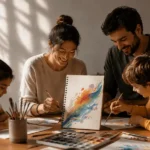
Joining a creative class, workshop, or group brings you into contact with other people who are also working through things. This sense of community and belonging is one of the most important parts of emotional recovery during major life changes.
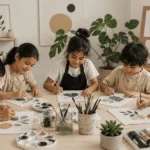
If you are a parent looking for ways to support a child going through a difficult time, creative art programs designed for children’s emotional well-being can offer a gentle and effective way to help them process big feelings through guided artistic activity.
The Connection Between Creativity and Confidence
One of the most common things people say after going through a major life change is that they lost confidence in themselves. They feel unsure, small, and hesitant to try new things.
Creative activities are one of the best ways to rebuild that confidence quietly and at your own pace. When you finish a drawing, write a short story, or paint a canvas, you have proof that you created something. That small win matters more than people realise.
Art educator and wellbeing researcher Dr Cathy Malchiodi has written extensively about how art-making activates the brain’s reward system and helps rebuild self-efficacy, which is your belief in your own ability to do things. This is especially important for adults who have stopped making creative things because they believe they are “not artistic.”
Here is the truth: everyone is creative. Creativity is not about talent. It is about expressing what is inside you. And during a life change, what is inside you is worth expressing.
If you are an adult in Melbourne who wants to explore this for yourself, the best adult drawing classes in Melbourne are a welcoming and practical way to build both your creative skills and your personal confidence in a supportive group setting.
What the Research Says About Art and Emotional Healing in 2026
The evidence linking creativity to emotional well-being has grown significantly in recent years. Here are some key findings worth knowing.
A 2023 report from Beyond Blue in Australia highlighted that creative engagement was one of the top five lifestyle activities that people found helpful for managing stress and improving mood. Creative therapies, including art therapy and music therapy, are now being integrated into mental health support programs across Australian hospitals and community centres.
Research published in The Lancet found that regular participation in arts activities was associated with lower rates of depression and anxiety across all age groups. The effects were especially strong during major life transitions such as bereavement, career changes, and relationship breakdowns.
In 2024, the Australian Institute of Health and Welfare reported that community-based wellbeing programs, including those with a creative focus, were seeing increasing demand from Australians aged 25 to 60. This age group is often going through career pivots, family changes, or health realisations that trigger the need for emotional support.
The trend has continued into 2026, with wellbeing professionals increasingly recommending creative activities as a first-line self-care tool alongside exercise and social connection.
Practical Ways to Start Using Creative Expression Today
You do not need a studio or special equipment to start. Here are some simple ways to bring creative expression into your life during a period of change.
Start a visual journal. Get a blank notebook and fill it with drawings, colour, collage, or anything that reflects your mood. Do not try to make it look good. Just make it honest.
Try free writing. Set a timer for ten minutes and write without stopping. Do not edit. Do not judge. Just let whatever is in your mind come out on the page.
Take a class. Structure can be helpful, especially if you are feeling lost. A regular weekly class gives you routine, community, and a gentle creative challenge to look forward to.
Use music. Create playlists that match how you are feeling, or try learning a basic instrument. Even humming or singing while you cook counts as creative expression.
Make something with your hands. Pottery, knitting, woodwork, or even cooking a new recipe all engage the same creative and calming parts of the brain.
The key is consistency over perfection. Even ten minutes of creative activity a day can make a meaningful difference to how you feel.
Finding Community Support Through Creativity in Melbourne
One of the most important things during a major life change is knowing that you are not alone. Community matters. Connection matters. And creative communities are some of the warmest and most welcoming spaces you can find.
Melbourne has a rich culture of creative community programs, workshops, and shared studios where people from all backgrounds come together to make things, share their stories, and support each other through the ups and downs of life.
Whether you are a parent, a professional, a retiree, or someone in the middle of a big personal transition, finding a group of people who create together can change how you experience that transition.
Artreach Collective is a Melbourne-based organisation that understands exactly this. Their programs are designed to use art as a tool for connection, well-being, and personal growth.
FAQ: Creative Expression and Life Changes
Q: Can creative expression actually help with grief and loss?
A: Yes. Creative activities such as painting, writing, and music have been widely used in grief counselling and bereavement support. They provide a non-verbal way to process loss and can help people move through the stages of grief at their own pace.
Q: Do I need to be artistic to benefit from creative expression?
A: Not at all. The benefits of creative expression come from the process, not the outcome. You do not need skill or training to experience the emotional and psychological benefits of making something.
Q: How often should I do creative activities to notice a difference?
A: Even two or three sessions per week of around 20 to 30 minutes can produce noticeable improvements in mood, stress levels, and emotional clarity. Consistency matters more than duration.
Q: Is creative expression the same as art therapy?
A: They are related but different. A qualified therapist conducts art therapy and has clinical goals. Creative expression is a broader term for any self-directed creative activity used for personal well-being. Both can be beneficial.
Q: Can children benefit from creative expression during family transitions?
A: Absolutely. Children often process emotions through creative play and art before they have the vocabulary to talk about their feelings. Creative programs designed for children can be especially powerful during family changes like moving, divorce, or starting a new school.
Bringing It All Together
Major life changes are hard. They shake your sense of who you are, what matters to you, and where you are going. But they are also moments of enormous potential. Many of the most meaningful periods of personal growth happen right in the middle of the hardest transitions.
Creative expression gives you a way to move through these moments with greater awareness, resilience, and connection to yourself and others. It is not a magic fix. But it is a genuinely powerful tool that more and more Australians are discovering in 2026.
If you are going through a life change right now and you are looking for a way to process what you are feeling, try picking up a pencil, opening a blank page, or finding a creative class near you in Melbourne. You might be surprised by what comes out.
To explore community-based creative programs and see what is available for both adults and children, visit the full range of programs here.
Artreach Collective offers creative wellbeing programs for adults and children across Melbourne, Australia, with a focus on using art to support emotional health, personal confidence, and community connection.