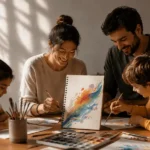
Sometimes, talking does not work. You sit with someone and try to find the right words, but they never come. You might be in a therapy session, or with a friend, or even just trying to process something on your own and the words feel stuck. This is a very common experience, and it is more normal than most people realise.
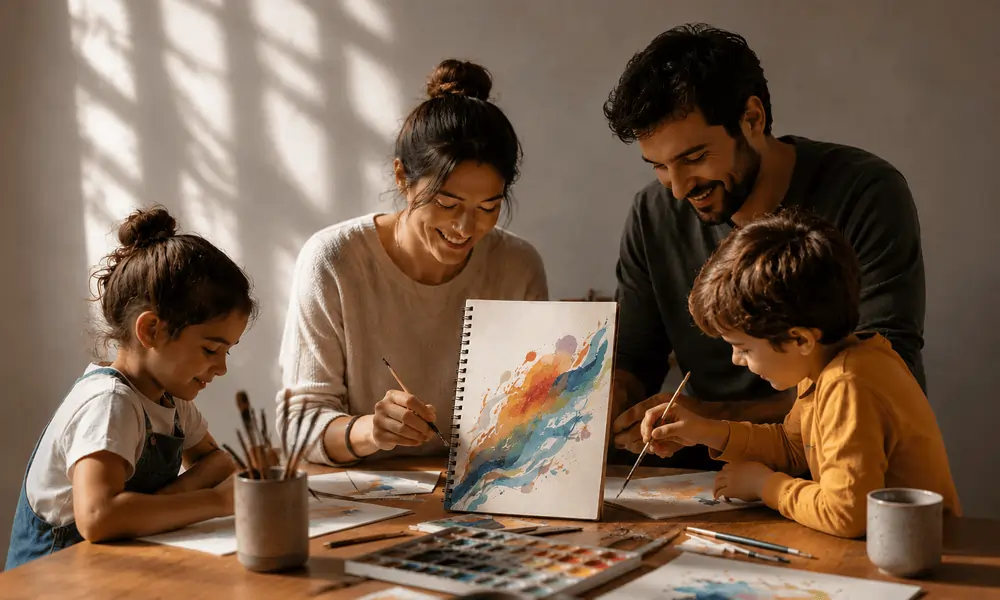
For many adults and children, feelings are not always easy to explain with words. Emotions linked to trauma, anxiety, or stress can be difficult to talk about. Sometimes people know how they feel, but they cannot find the right words to express it. This is where creative expression can help. Activities such as drawing, painting, crafting, and other forms of art give people another way to share their thoughts and emotions without needing to speak.
This article explores why creative expression is so powerful for emotional wellbeing, how it works differently from traditional talk-based approaches, and what that can mean for you or someone you care about.
When Words Are Not Enough
Think about a moment when you felt overwhelmed but could not explain why. Or a time when a child had a meltdown for what seemed like no reason. Or when someone who experienced something painful simply could not talk about it not because they did not want to, but because the words were not there.
This is not a personal failing. It is actually how the brain works.
Research in neuroscience has shown that traumatic or difficult experiences are stored in the part of the brain that controls emotion and memory, not the part that controls language. This is why so many people say things like “I know what I feel, I just cannot explain it.” The feeling is real. The words are simply not available.
Creative expression whether it is painting, drawing, sculpting, or collage accesses the brain through a different door. It lets people communicate and process feelings without needing to put them into a sentence first.
What Creative Expression Actually Does for Your Mind
Creative activities are not just about making something pretty. When you engage in art-making, your nervous system actually shifts. The repetitive, focused motion of drawing or painting can calm the stress response in your body. It brings you into the present moment, which is why so many people describe art as “meditative.”
This is one of the key differences often discussed in Art Therapy Collective vs. Traditional Therapy conversations. While traditional therapy primarily relies on verbal communication, creative expression offers another pathway for exploring thoughts, emotions, and experiences that may be difficult to put into words. Through art-making, people can process feelings, gain insight, and develop a stronger sense of self-awareness in a natural and engaging way.
Here is a simple way to think about it:
| What Traditional Conversation Does | What Creative Expression Does |
| Requires verbal language | Works without words |
| Can feel confronting or pressured | Feels safe and low-stakes |
| Relies on conscious memory | Accesses emotional memory |
| Linear and structured | Non-linear and open |
| Can trigger anxiety | Often reduces anxiety |
For people who feel anxious in talk-based settings, the creative space can feel genuinely safe. There is no “wrong” answer when you are drawing. No one is judging your response. You are simply making, and in that making, something emotional often begins to shift.
Why Children Respond So Well to Creative Activities
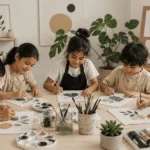
Children are natural creators. Before they have a full vocabulary, they draw pictures, act out stories, and use their hands to make sense of the world. Creative activities are not new or foreign to them; they are actually how children naturally process their experiences.
For kids who are going through a difficult time whether that is school stress, family changes, anxiety, or something harder to name, art therapy classes Melbourne offer a space where they can express what they are carrying without being asked to explain it. A child might not say “I feel scared about starting a new school.” But they might draw a figure standing alone at the edge of a page, surrounded by much bigger shapes. That picture tells a story words never could.
Art-based support for children does not push or probe. It follows the child’s lead. A skilled facilitator creates a safe container where the creative process itself does the work. Children feel seen, not scrutinised. That distinction matters enormously.
Adults Benefit Too Maybe Even More
Adults often carry the heaviest emotional loads with the least amount of support. There is a social pressure to “have it together,” to be functional, and to manage feelings privately. Many adults go years without finding a genuine outlet for what they are holding.
This is one of the reasons drawing classes for adults have become so popular not just as a hobby, but as a genuine form of self-care. When adults give themselves permission to create without judgement, something opens up. Stress that has been sitting in the body starts to move. Feelings that had no outlet begin to find one.
There is also the joy factor. Adults rarely give themselves permission to play. Art-making reconnects people with a lighter, more spontaneous part of themselves. That experience alone can be deeply healing.
The Difference Between Art Therapy and Art Classes
It is worth understanding that creative expression for wellbeing sits on a spectrum. On one end, you have structured art therapy delivered by trained professionals who use creative activities as a clinical tool. On the other end, you have community art classes that simply provide a warm, supportive space for people to create and connect.
Both have real value. And for many people, either can be a meaningful starting point.
Beginners art classes for adults are a wonderful entry point because they remove the pressure of skill. You do not need to know how to draw. You do not need prior experience. You just need to show up and be willing to try. The focus is on the process, not the product.
For those who want something more therapeutically guided, adult acrylic painting classes and similar structured sessions can offer a blend of creative skill-building and emotional exploration in the one space.
How Creative Expression Supports Personal Growth
Creative expression is not just about managing difficult emotions, it is also a genuine pathway to support personal growth through creative expression . When you engage regularly in creative practice, you start to develop a relationship with yourself that is quieter and more honest than what most people experience in daily life.
You start to notice patterns in what you draw, in what colours you reach for, in what subjects you avoid. Over time, this self-awareness becomes a resource. You understand yourself better. You make choices that align more closely with who you actually are, rather than who you think you are supposed to be.
This is one of the reasons creative expression has long been used in wellbeing settings. It is not a soft option or a distraction from “real” work. It is work. It just looks different from sitting on a couch and answering questions.
Signs That Creative Expression Might Be Right for You
Not everyone will connect immediately with the idea of making art as a form of emotional support. But there are some clear signs that it might be worth exploring:
You feel like you have a lot inside but struggle to put it into words. You feel tense, flat, or emotionally stuck even when life looks fine on the outside. Talking about how you feel makes you anxious or uncomfortable. You used to enjoy creative activities as a child but gave them up. You are a carer, parent, or professional who gives a lot and has very little left over. You are supporting a child who is struggling but will not open up.
If any of these feel familiar, the creative space might offer something that other approaches have not.
Creative Wellbeing and Mental Health, What the Evidence Shows
The connection between creative activities and mental wellbeing is not just anecdotal. There is a growing body of research that supports what many practitioners and participants have known for years.
Studies have found that regular engagement in creative activities is linked to lower levels of stress hormones, improved mood, a greater sense of meaning, and stronger social connection. This highlights the value of creative expression support for mental well-being, particularly for people looking for healthy ways to manage everyday stress and emotional challenges. For people experiencing anxiety and depression, creative engagement has been shown to support recovery alongside other treatments.
The World Health Organisation has also recognised the role of arts in health, noting that creative activities can improve mental health outcomes across a wide range of conditions.
This does not mean art replaces medical or psychological care where that is needed. But it does mean that creative expression is a serious, evidence-backed tool for emotional wellbeing not a fluffy extra.
A Real Story Worth Sharing
Consider someone who experienced a significant loss and found themselves unable to talk about it, even with a counsellor. Week after week, they sat in silence, not knowing how to begin. A friend suggested they try painting. With no experience and no expectations, they started showing up to a local art class.
In those early sessions, they painted abstract shapes in heavy, dark colours. Over time, the paintings changed. Lighter tones appeared. More open shapes. The facilitator never asked them to explain anything. But after a few months, the person said something simple: “I think I’ve started to feel like myself again.”
That is not a dramatic story. It is a quiet one. But those quiet stories are often the most real.
Frequently Asked Questions
Q: Do I need to be good at art to benefit from creative expression?
A: No. Creative expression for wellbeing is about the process, not the result. You do not need any skill or prior experience. What matters is that you show up and engage with the making.
Q: Is art therapy the same as going to an art class?
A: Not exactly. Art therapy is a clinical practice delivered by qualified professionals, often used to address specific mental health concerns. Art classes in a supportive setting offer creative engagement and community, which also has real wellbeing benefits. Both are valuable and serve different needs.
Q: Can children really benefit from art-based support?
A: Yes, significantly. Children naturally communicate through play and creative activity. Art-based support allows children to express and process emotions that they may not have the words for, in a way that feels safe and non-threatening.
Q: How often should someone attend creative sessions to see a benefit?
A: Even one session can shift your state. But regular engagement tends to produce more lasting benefits. Many people find that attending once a week over several weeks creates a noticeable difference in how they feel and how they relate to themselves.
Q: Is creative expression suitable for someone with serious mental health concerns?
A: Creative expression can be a powerful complementary support, and in many cases is used alongside traditional mental health treatment. If you have serious mental health concerns, it is always worth speaking with a healthcare professional about what combination of support is right for you.
Finding the Right Space for Creative Expression in Melbourne
If you are based in Melbourne and are curious about exploring creative expression for yourself or your child, finding the right environment matters. Look for a space that prioritises warmth, inclusivity, and a non-judgemental approach. Skill level should never be a barrier to entry.
Art therapy class for kids and adult programmes in a supportive Melbourne setting can offer exactly the kind of experience described throughout this article one where the process leads and the person follows at their own pace.
Artreach Collective, based in Melbourne, provides exactly this kind of creative and therapeutic space for both adults and children, welcoming people of all backgrounds and experience levels.
Final Thoughts
Traditional conversation is a powerful tool. But it is not the only tool. For many people children and adults alike creative expression fills a gap that words simply cannot reach. It is not a replacement for everything else. It is an addition, a complement, and sometimes a beginning.
If you have ever felt like something was stuck inside you that you could not quite say out loud, that is a very human experience. And the good news is there are other ways to let it move. Sometimes, all it takes is a paintbrush, a blank page, and permission to begin.