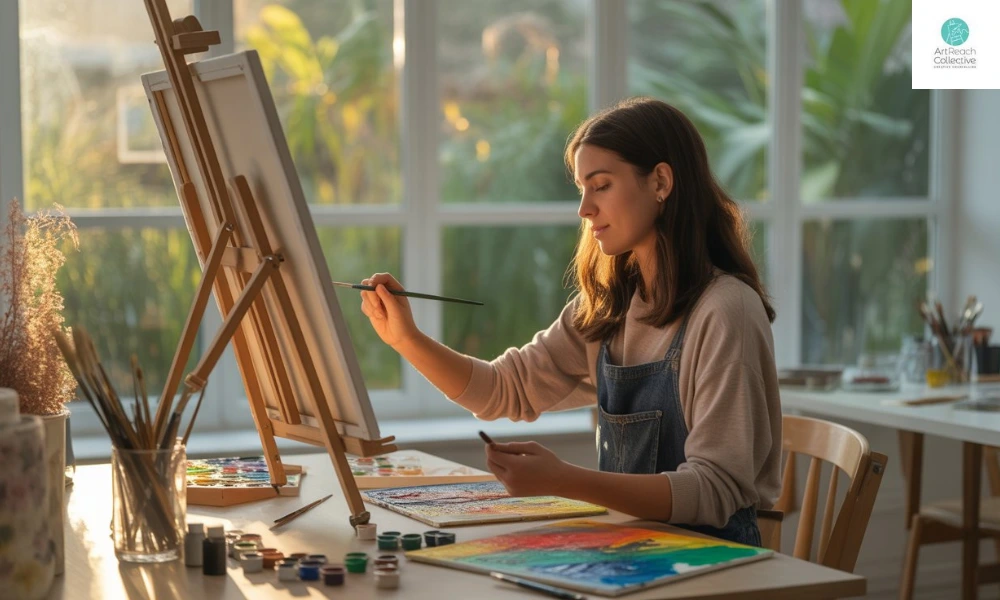
I’ve spent years watching people walk into creative spaces carrying invisible burdens, stress, grief, anxiety, loneliness. What amazes me is how a simple brush stroke, a handful of clay, or a splash of watercolour can begin to shift something deep inside. This isn’t magic. It’s art therapy, and it’s one of the most genuine trends I’ve seen in how people are learning to heal.
What’s Driving This Movement?
The shift toward art therapy as mainstream healing feels almost inevitable when you look at where we are. People are exhausted by talking-only therapy. Don’t get me wrong, it’s valuable, but sometimes our pain lives deeper than words can reach. According to mental health discussions across platforms like Reddit and therapy forums, more people are now searching for “somatic” or “embodied” healing approaches. They want to feel their way through emotions, not just think about them.
What I’ve noticed in my studio in Melbourne is that this trend isn’t just happening in therapy rooms. It’s everywhere. Instagram is filled with “art as medicine” content, TikTok creators talk openly about using sketching to manage anxiety, and mainstream wellness brands are jumping on the bandwagon. There’s something happening culturally, a recognition that creativity and healing aren’t separate things.
Why Art Works Where Words Sometimes Fail
Here’s what I’ve learned through countless sessions: when someone is struggling with deep pain, their left brain (the logical, verbal side) often shuts down. But their creative brain? That’s still alive, still hungry to express itself.
Art therapy works because it bypasses our filters. You don’t need to be good at painting to benefit from it. I tell every person who walks through the door nervous about their artistic ability: “This isn’t about creating a masterpiece. It’s about creating a conversation between you and your feelings.”
When you’re dealing with trauma, grief, or chronic stress, talking about it can feel like poking at a wound. But painting it? Sculpting it? Creating it into something tangible? That transforms the experience. You’re not just sitting with your pain anymore you’re doing something with it. You’re giving it form, colour, and texture. Suddenly, you have a little more power over it.
Real Examples of Transformation
I’ve worked with clients who came to the studio in Caulfield North convinced they couldn’t create anything worthwhile. A woman who’d survived loss spent three months creating a series of abstract paintings in shades of grey and gold. By the end, she told me that watching those colours emerge felt like watching herself emerge from darkness. She wasn’t suddenly “better,” but she’d found a way to honour her journey.
Another client used clay to process anger he couldn’t express verbally. Each week, he’d squeeze, punch, and reshape that clay. His therapist noted real changes in his emotional regulation. The physical act of working with the medium became a form of emotional release that talking alone had never provided.
I should mention that I don’t claim to be a replacement for professional mental health support, and everyone’s healing journey is different. What works beautifully for one person might feel awkward for another, and that’s completely okay.
The Science-ish Bit (Where I’ll Be Honest About What I Don’t Fully Know)
I’m not a neuroscientist, so I can’t give you the complete picture of exactly what’s happening in your brain when you paint. But research suggests that creative activities activate areas of the brain associated with emotional processing and stress relief. Art therapy appears to lower cortisol (that stress hormone), increase mindfulness, and create new neural pathways. Basically, it helps your brain build new, healthier patterns.
What I’m less certain about is exactly how much of the benefit comes from the creative process itself versus the therapeutic relationship and safe space involved. Probably both matter equally. I suspect we’ll understand this better in the coming years as more research emerges.
Why This Trend Is Sticking Around
Unlike some wellness trends that fade, art therapy has staying power because it’s not just feel-good it actually works. And it’s accessible. You don’t need expensive materials or special training. A pencil and a piece of paper are enough.
I’ve also noticed that younger generations especially are drawn to this approach. They’ve grown up with therapy being less stigmatized, and they’re actively seeking out evidence-based, creative approaches to mental health. At Art Reach Collective, we’re seeing more adults and young people asking for art therapy specifically, not just art classes.
The pandemic accelerated this too. When lockdowns happened, people needed something they could do at home, something that didn’t require a gym or a gym buddy. Many discovered that creating art, even messy, imperfect art, was grounding and calming.
What’s Still Unclear and What Might Change
Honestly? I don’t know how art therapy will evolve over the next five years. Will it become more integrated into mainstream mental health treatment? Will we see more insurance coverage? (This varies massively by country. I’m based in Melbourne where we’re still working on broader accessibility.) Will virtual art therapy become equally effective as in-person sessions?
What I do know is that more people are recognizing that healing isn’t linear, and it’s not one-size-fits-all. Some people will always prefer traditional talk therapy. Others will find their breakthrough in a painting. Many will need both.
I also think we’ll see more conversations about art therapy for specific communities, people navigating disability, neurodivergence, cultural identity, and complex grief. The field is expanding in really exciting ways.
The Real Transformation
The most important thing I’ve learned is simple: transforming pain into beauty means giving it a voice. You’re not erasing the hurt, you’re creating something meaningful from it. That’s where the real power lives.
Quick FAQs
Q: Do I need to be artistic?
A: Not at all! It’s about expressing feelings, not creating masterpieces.
Q: How often should I do art therapy?
A: Weekly or fortnightly sessions work best to start, then adjust based on your needs.
Q: Is art therapy like art classes?
A: Art classes teach skills. Art therapy uses creativity as a healing tool with a trained facilitator.
Q: Can it help with anxiety or trauma?
A: Yes, it’s very helpful for anxiety, depression, and stress when combined with other support.