How Can Art Classes Help Children Stay Away From Negative Influence?
You’ve probably noticed it too. Kids today face more distractions and negative influences than ever before. From social media pressures to groups that don’t always have their best interests at heart, parents in Melbourne and everywhere else are asking: how do we keep our children on a positive path?
Here’s something you might not have considered: kids art classes could be part of the answer. And no, I’m not just talking about keeping kids busy (though that helps too). There’s actually solid reasoning behind why creative programs work as a protective factor for young people.
Let me walk you through this with you, because whether you’re a parent, teacher, or just someone who cares about kids, understanding this connection matters.
Why Kids Need Positive Outlets (And Why Art Works)
Think about your own childhood for a moment. When you had nothing to do, what happened? Boredom kicked in, right? And bored kids often find trouble, not because they’re bad, but because they’re looking for something stimulating.
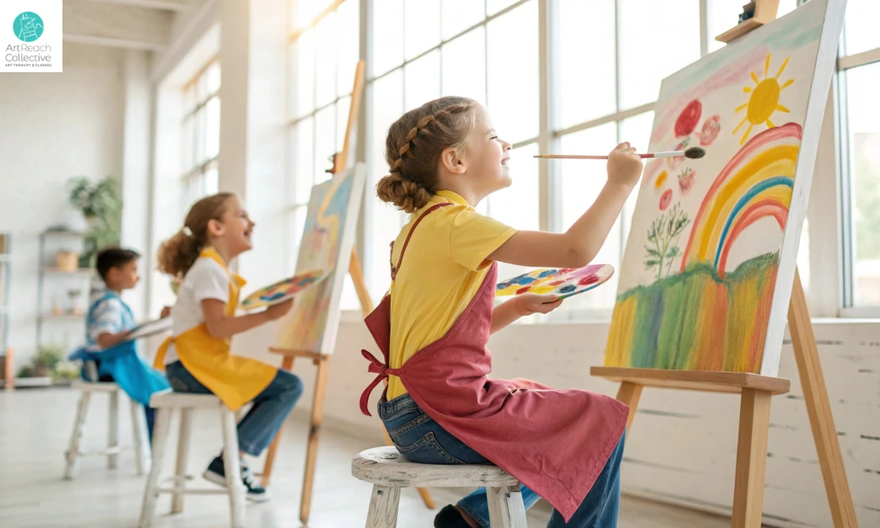
Art classes fill that gap in a meaningful way. When children are engaged in painting, drawing, sculpture, or any creative activity, they’re not just passing time. They’re channeling energy into something constructive. Their hands are busy, their minds are focused, and honestly, they’re too absorbed to think about much else.
Research from youth development experts consistently shows that kids involved in structured activities, especially creative ones, have lower rates of risky behavior. A study from the University of Melbourne found that children participating in regular arts programs showed improved emotional regulation and better decision-making skills. These aren’t small things. These are the exact skills that help kids say “no” when negative influences come calling.
Building Self-Worth Through Creation
Here’s where it gets really interesting. You know that feeling when you make something with your own hands and step back thinking, “I did that”? Kids experience that same rush, but it’s even more powerful for them because they’re still figuring out who they are.
Every time a child completes an art project whether it’s a messy finger painting or a carefully crafted ceramic bowl they’re building confidence. They’re proving to themselves that they can start something and finish it. That they have value. That they’re capable.
And kids with healthy self-esteem? They’re far less likely to seek validation from negative peer groups or engage in risky behaviors just to fit in. They already know they’re worth something because they’ve got the evidence right there on the canvas.
I’ve spoken with parents whose children attend art sessions in Melbourne‘s inner suburbs, and they all mention the same thing: their kids walk taller after art class. There’s something about creative achievement that builds a kid from the inside out.
Creating a Sense of Belonging (The Good Kind)
Let’s be honest humans are pack animals, and kids especially need to belong somewhere. If they don’t find belonging in positive spaces, they’ll find it elsewhere. And that elsewhere isn’t always somewhere you’d want them.
Art classes create communities. When you attend regular sessions at places like Artreach Collective or other creative studios around Victoria, you’re not just learning techniques. You’re becoming part of a group. You’re the kid who’s good at watercolors, or the one who always thinks of creative solutions, or the person everyone asks for help with shading.
These identities matter. They give children a role that’s positive and valued. In art spaces, kids meet peers who share their interests and peers who think spending Saturday morning painting is cool, not weird. They meet instructors who encourage them, adults who see their potential.
Teaching Emotional Expression (Instead of Suppression)
Here’s something crucial that doesn’t get talked about enough: kids who can’t express their feelings often express them in destructive ways.
When children don’t have healthy outlets for anger, frustration, sadness, or even joy, those emotions don’t just disappear. They come out sideways through aggression, withdrawal, or seeking comfort in harmful places.
Art gives kids a language when words fail them. A child who’s angry about their parents’ divorce might not be able to articulate it, but they can splash red and black across a canvas. A kid anxious about school can sculpt their worries into clay and literally reshape them.
I’m saying art class helps in therapy (though art therapy is absolutely a real and valuable thing). And regular creative practice teaches children that feelings are normal and can be channeled productively. This emotional literacy becomes a shield against negative influences that prey on kids who feel lost or unable to cope.
Keeping Minds and Hands Busy (The Practical Bit)
Let’s get practical for a moment. A lot of negative influences catch kids during unstructured time. After school, weekends, school holidays these are high-risk periods when kids might fall into questionable company simply because they’ve got nothing better to do.
But it’s more than just babysitting. Unlike just parking kids in front of a screen, art classes keep both hands and minds engaged. They’re actively creating, problem-solving, and learning. They’re tired in a good way when they come home, the kind of tiredness that comes from productive effort, not the drained feeling that comes from passive consumption.
Learning Discipline and Goal-Setting
Here’s something that might surprise you: art isn’t all free-spirited chaos. Good art programs teach discipline.
You have to learn techniques. You have to practice. You have to stick with a project even when it’s not going well. You have to accept critique and use it to improve. These are life skills dressed up as creative activities.
When kids learn that improvement requires effort that the amazing artwork they admire didn’t just happen but resulted from practice and persistence—they’re learning a mindset that protects them from quick-fix temptations. Whether that’s substance use, cheating, or other shortcuts, kids who’ve learned the value of sustained effort through art are better equipped to resist.
A local art instructor from a Brunswick studio told me, “I see kids come in wanting to paint like masters on day one. Three months later, they understand that skill builds gradually. That lesson that good things take time that’s what they carry into the rest of their lives.”
Connecting With Positive Role Models
Art teachers matter. Not just because they teach technique, but because they become mentors. They’re adults who aren’t parents or school teachers, a different kind of authority figure who kids often respond to differently.
A good art instructor sees potential in every child. They encourage without being pushy. They challenge without crushing. They notice when a kid’s struggling and check in. This kind of positive adult attention is incredibly protective for children.
Kids who have several trusted adults in their lives, parents, teachers, coaches, and yes, art instructors are statistically less likely to engage in risky behaviors. They’ve got a support network, people who’d notice if things went sideways, people whose good opinion they value enough not to throw away.
The Melbourne Creative Scene: A Local Advantage
If you’re reading this from Melbourne, you’re in a particularly good position. Victoria’s capital has a thriving arts community with programs accessible across different neighborhoods and price points.
The City of Melbourne, Moreland, Darebin, and other councils run fantastic initiatives. There are school holiday programs, weekend workshops, and ongoing classes. Some are free, some are low-cost, and the variety means you can find something that fits your child’s interests whether that’s traditional painting, digital art, sculpture, or something else entirely.
What I’m Still Figuring Out
Look, I’ll be straight with you. I don’t have all the answers here. While the research supports art’s positive impact on kids, every child is different. Some kids thrive in art classes; others might find their protective outlet in sports, music, or robotics clubs. The key seems to be finding something structured and positive, not necessarily art specifically.
There’s also the question of access. Not every family can afford regular classes, and not every neighborhood has equal access to quality programs. This is where community programs and school-based initiatives become crucial, but they’re not universally available.
I also wonder about the long-term effects. Do kids who participate in childhood art programs maintain those protective factors into adolescence and adulthood? Some studies suggest yes, but this is still an area where more research would be valuable.
Looking Ahead: What Changes Might We See?
Here’s what I think about when I consider the future of this issue.
First, I hope we see more integration of arts programs into standard education rather than treating them as optional extras. When budget cuts happen, creative subjects are often the first on the chopping block. That feels backwards when we understand how strong their protective value really is. Programs like creative art classes Melbourne families already value show how arts education can support emotional development alongside academic learning, not compete with it.
Second, digital art and creative technology might open new doors. Virtual reality art, digital animation, game design might engage kids who don’t connect with traditional media. The protective factors engagement, achievement, community, expression can work through any medium.
Third, we might see more explicit connections between arts programs and mental health support. Some organizations are already doing this, creating spaces where creative activity and emotional support happen side by side.
Finally, I’d love to see research that follows kids longitudinally tracking them from childhood through adolescence to see how sustained creative engagement impacts life outcomes. The anecdotal evidence is strong, but hard data would help make the case for funding and support.
The Bottom Line (Yes, There Is One)
Can art classes really help keep children away from negative influences? Based on everything I’ve explored here, I believe the answer is yes with the caveat that art isn’t a magic shield, just one powerful tool among many.
Art classes provide structure, build confidence, create community, teach emotional expression, fill time productively, develop discipline, and connect kids with positive role models. That’s a lot of protective factors wrapped up in something kids often enjoy anyway.
If you’re a parent in Melbourne or anywhere else, and you’re looking for ways to support your child’s development while protecting them from negative influences, enrolling them in a local art program is worth considering. It might not solve every problem (what does?), but it stacks the deck in your child’s favor.
And in parenting, sometimes that’s the best we can do to give our kids the best possible odds and trust that we’ve provided them with tools they need to navigate their world.
Frequently Asked Questions
Q: What age should my child start art classes?
A: Most programs accept children from 4-5 years old, though some offer parent-child classes for younger kids. Many Melbourne studios offer trial classes to see if your child’s ready.
Q: How often should children attend art classes to see benefits?
A: Consistency matters more than frequency. One class per week attended regularly provides better benefits than sporadic workshops. Most experts recommend at least one hour weekly.
Q: Are online art classes as effective as in-person ones?
A: In-person classes offer better community building and mentor connections, but online options work well for accessibility and convenience. The best choice depends on your child’s learning style.
Q: What if my child isn’t naturally “artistic”?
A: Good news: you don’t need natural talent to benefit from art classes. The confidence building, emotional expression, and community work regardless of skill level. Good instructors focus on effort and improvement, not innate ability.