We’ve all seen it happen. A child stands at the edge of the playground, watching other kids laugh and play together. They want to join in, but something holds them back. Their hands fidget, their eyes look down, and they stay quiet. As parents, watching this can break our hearts.
Shyness in children is more common than most people think. Research shows that around 15-20% of children are born with a temperament that makes them more cautious in social situations. But here’s the thing – shyness doesn’t have to be a permanent barrier. Art therapy classes are emerging as a powerful tool to help shy children find their voice, build confidence, and connect with others in ways that feel safe and natural.
Understanding the Shy Child’s World
Before diving into solutions, it’s worth understanding what’s really happening inside a shy child’s mind. Shyness isn’t just about being quiet. It’s often linked to anxiety about being judged, fear of making mistakes, or simply feeling overwhelmed in social settings.
Many shy children have rich inner worlds. They observe everything, think deeply, and often possess remarkable creativity. The challenge isn’t a lack of ideas or feelings – it’s finding a comfortable way to express them. Traditional classroom settings or direct social interactions can feel like standing in a spotlight when all they want is a dimmer switch.
Why Traditional Approaches Sometimes Fall Short
“Just be more confident!” or “Don’t be shy!” – these well-meaning phrases rarely help. Pushing a shy child into uncomfortable social situations without proper support can actually reinforce their anxiety. They need a bridge between their inner world and outer expression, something that doesn’t feel forced or scary.
This is where art therapy enters the picture with a completely different approach.
What Makes Art Therapy Different?
Art therapy classes aren’t just about drawing pictures or making crafts. It’s a therapeutic approach that uses creative expression as a form of communication. For shy children, this is revolutionary because it removes the pressure of direct verbal communication.
Think about it this way: when a child is asked “How are you feeling?” they might freeze up. But hand them some paint and paper, and suddenly their emotions flow onto the canvas without words. Art becomes their voice.
In Melbourne, Australia, Artreach Collective have been offering specialized programs that combine professional art therapy techniques with child-friendly environments. These classes create safe spaces where children can express themselves without judgment.
The Science Behind Creative Expression
Research in child psychology has shown some fascinating connections between creative activities and emotional development. When children engage in art-making, different parts of their brain activate – areas responsible for emotional processing, motor skills, and problem-solving all work together.
One study from the Australian Journal of Psychology found that children participating in regular art therapy sessions showed measurable improvements in self-expression and social confidence over a 12-week period. The creative process itself becomes a form of communication that bypasses the anxiety-triggering aspects of direct social interaction.
Real Changes We’re Seeing in Art Therapy Sessions
From conversations with parents and therapists working in this field, several common patterns emerge when shy children participate in art therapy classes:
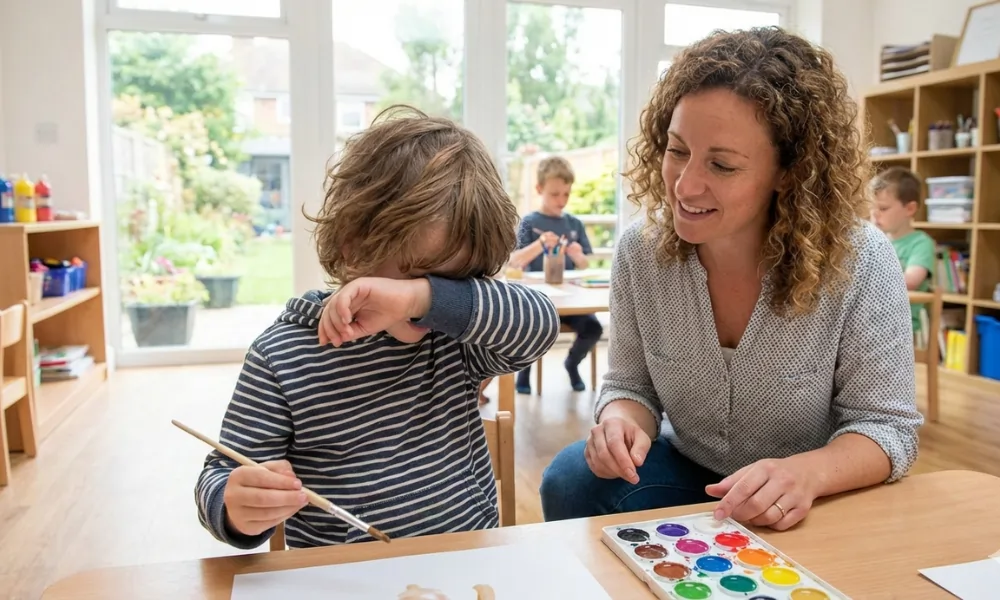
Week One to Four: Children often start by working quietly on their own. They’re observing, adjusting to the space, and beginning to trust the environment. The pressure to interact is minimal.
Week Five to Eight: Small interactions begin. A child might show their artwork to another student, or comment on someone else’s creation. These micro-connections happen naturally, without forced conversation.
Week Nine to Twelve: Group projects become possible. Children who once avoided eye contact are now collaborating, sharing materials, and even offering suggestions to peers. Art serves as a common language that everyone speaks.
One mother from the eastern suburbs of Melbourne shared her experience: “My daughter wouldn’t even order her own food at restaurants. After three months of art therapy classes, she voluntarily presented her artwork to the whole group. That moment brought tears to my eyes.”
How Group Art Sessions Build Social Skills Naturally
Here’s where art therapy sessions get really interesting for shy children. Unlike traditional group activities where social interaction is the main focus, art therapy groups put the creative process first. Social connections happen as a natural byproduct.
When children work on art projects alongside others, they’re unconsciously learning important social skills:
- Turn-taking while sharing materials
- Accepting different perspectives and styles
- Giving and receiving gentle feedback
- Collaborating toward common goals
These interactions feel safe because the focus stays on the art, not on performing socially. There’s no right or wrong way to create, which removes the fear of judgment that often paralyzes shy children.
The Role of Professional Guidance
Not all art classes are created equal when it comes to helping shy children. The difference lies in the training and approach of the instructor. Art therapists understand child development, recognize signs of anxiety, and know how to create genuinely supportive environments.
They might notice when a child consistently chooses dark colors, or when they hide their work from others. These observations aren’t about criticism – they’re opportunities for gentle intervention and support. A trained therapist knows how to ask questions that open doors rather than create pressure.
Beyond the Art Room: Skills That Transfer to Daily Life
The beautiful thing about confidence built through art therapy is that it doesn’t stay confined to the art room. Parents report seeing changes in various aspects of their children’s lives:
Children start raising their hands in regular school classes. They initiate conversations with neighbors at parks. They try new activities they previously avoided. The confidence gained through creative expression creates a positive feedback loop that touches every area of life.
What Parents Can Do to Support the Process
While professional art therapy provides structured support, parents play a crucial role in reinforcing progress. Creating a judgment-free creative space at home makes a difference. This doesn’t require expensive supplies – sometimes it’s just paper and crayons on the kitchen table.
The key is focusing on the process rather than the product. Instead of “What a beautiful picture!” try “Tell me about what you made.” This shifts attention to their expression rather than external judgment.
Addressing Some Honest Limitations
It would be misleading to suggest art therapy is a magic solution for every shy child. Some children might need additional support, such as play therapy or counseling. Others might have underlying conditions like social anxiety disorder that require comprehensive treatment approaches.
Art therapy works best as part of a broader support system that includes patient parents, understanding teachers, and sometimes other therapeutic interventions. It’s one powerful tool in the toolbox, not the only tool.
Also, progress isn’t always linear. Some weeks will show breakthroughs, others might feel like steps backward. This is normal and doesn’t mean the approach isn’t working.
Finding the Right Program in Melbourne
For parents in Melbourne looking for art therapy options, several factors matter when choosing a program. Location convenience helps with consistency – if classes are too far away, attendance becomes difficult. The northern suburbs and southeastern areas all have various options available.
Class size matters too. Smaller groups (typically 6-8 children) allow for more individualized attention while still providing social interaction opportunities. The age grouping should be appropriate – mixing very young children with pre-teens rarely works well.
Looking Toward the Future
The field of art therapy for children is evolving. We’re seeing more research, better training programs for therapists, and growing recognition from mainstream education and healthcare systems. Schools in Australia are beginning to incorporate creative therapies into their support programs for students facing social challenges.
Digital art tools are also entering the conversation. While traditional hands-on art has unique benefits, digital platforms might offer new ways for shy children to express themselves, especially those who feel comfortable with technology.
What remains unclear is how early intervention through art therapy might impact long-term outcomes. Do children who participate in these programs as youngsters develop lasting confidence? Do they maintain better social connections into adolescence and adulthood? These are questions that longer-term studies will hopefully answer.
A Final Thought
Watching a shy child struggle socially is difficult, but it’s important to remember that shyness itself isn’t a flaw that needs fixing. Many shy children grow into thoughtful, creative adults. The goal of art therapy isn’t to change who they are – it’s to give them tools to express their authentic selves comfortably.
Art therapy classes for kids offer something special: a path forward that honors a child’s natural temperament while building bridges to greater confidence and connection. For many families, it’s been the missing piece that helps their child step out from the shadows and into their own light.
Frequently Asked Questions
Q: How long does it take to see results from art therapy classes?
A: Most parents notice small changes within 4-6 weeks, such as increased willingness to attend class or share artwork. More significant shifts in confidence typically appear after 2-3 months of consistent participation. Every child’s timeline is different.
Q: Can art therapy help with shyness if my child isn’t naturally artistic?
A: Absolutely. Art therapy isn’t about creating masterpieces or having natural talent. It’s about expression and process. Children who think they “can’t draw” often benefit the most because they learn there’s no wrong way to create.
Q: What age is best to start art therapy for shy children?
A: Programs typically accept children from age 4-5 upward. Younger children benefit from play-based approaches, while older children and teens can engage with more complex creative processes. The key is finding age-appropriate programs.
Q: How is art therapy different from regular art classes?
A: Regular art classes focus on teaching techniques and skills. Art therapy uses creative expression as a tool for emotional development and communication. Therapists are trained to recognize and support psychological needs, not just artistic development.