Every parent knows that moment. Your child comes home from school looking sad. They do not want to talk. They just sit quietly in their room. Or maybe they get upset over small things, and you are not sure why.
Children go through hard times just like adults do. Friendship problems, moving to a new school, family changes, feeling left out, or just feeling worried about life. The difference is that children often do not have the words to explain what is going on inside their hearts and minds.
That is where art comes in.
Drawing, painting, craft, and other creative art activities give children a safe way to show what they are feeling. You do not need words when you have a paintbrush. You do not need to explain yourself when you are lost in creating something with your hands.
More than just a fun activity, art can support emotional well-being, encourage self-expression, and help children navigate life’s challenges. This is why many parents and educators believe that art therapy is effective for children’s emotional growth, helping young minds develop resilience, confidence, and healthy ways to express their emotions.
Why Children Find It Hard to Talk About Their Feelings
Children’s brains are still growing. The part of the brain that helps us understand and manage emotions keeps developing all the way into adulthood. This means children genuinely struggle to put big feelings into words; it is not that they do not want to share, it is that they often simply cannot.
On top of that, many children today feel a lot of pressure. School can be stressful. Making friends can feel scary. Family changes can be confusing. And sometimes children carry worries around for weeks without anyone knowing.
Research from the Australian Institute of Health and Welfare shows that one in seven Australian children aged 4 to 17 experience a mental health challenge. Anxiety and emotional struggles are among the most common.
Many of these children do not get help early enough. Some families are not sure where to turn. Others feel that their child is not “bad enough” to need support. But early support through creative art activities can make a real difference before things get harder.
How Art Helps Children Through Difficult Times
Art works because it gives children something to do with their feelings. Instead of holding everything inside, they can put it onto paper, into clay, or onto a canvas. The act of creating something is calming, freeing, and healing all at once.
Here is how art specifically supports children going through tough times.
Drawing and Painting
When a child draws or paints, they are giving their feelings a shape and a colour. An angry child might paint something bold and red. A sad child might draw rain clouds. A child who feels alone might paint a single figure in a big space.
None of this needs to be explained or analysed. The simple act of putting feelings onto paper helps children release what is building up inside. It is a form of emotional relief that feels natural and safe.
Art therapists around the world use drawing and painting as a core tool to help children process trauma, grief, anxiety, and big life changes. Even outside a therapy setting, regular art activities at home or in a group program can have a deeply calming effect on children.
Craft and Hands-On Art Making
There is something very grounding about working with your hands. Cutting, gluing, folding, moulding clay, threading beads, and making collages all of these activities bring children into the present moment.
When a child is focused on making something, their brain stops spinning with worries. They feel calm. They feel in control. And at the end, they have something they made themselves, which builds pride and confidence.
For children going through family changes or dealing with stress, hands-on craft activities offer a peaceful break from whatever is happening in their world. They do not have to think about problems. They just get to create.
Group Art Activities
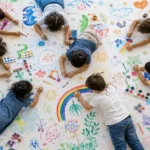
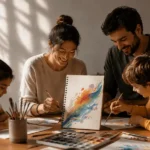
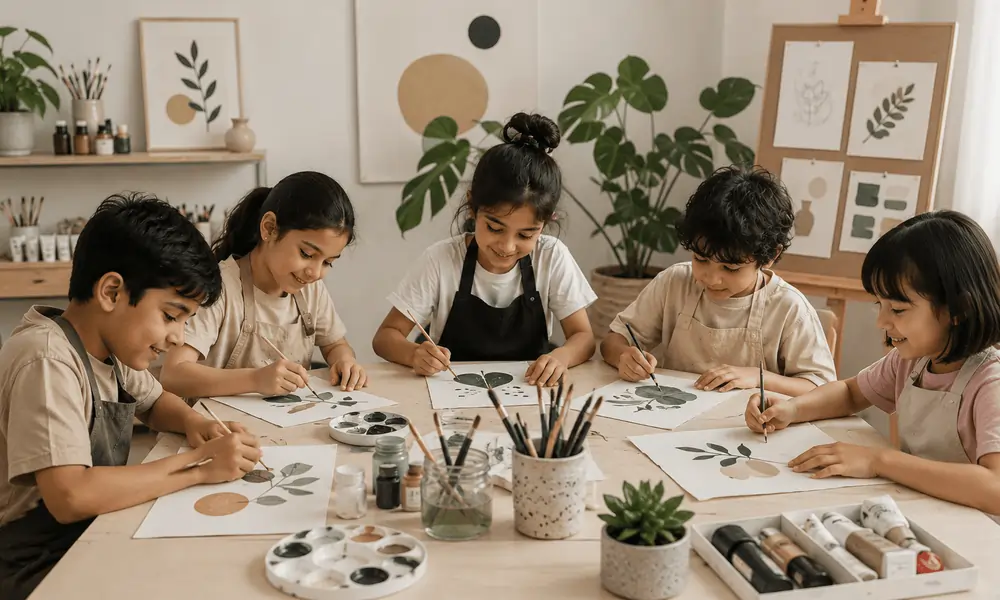
One of the most beautiful things about art programs is that they bring children together. When children sit around a table making art together, something special happens. They relax. They start talking. They notice that other children are also figuring things out. They feel less alone.
For children who find it hard to make friends or who feel shy and withdrawn, a group art setting can be the perfect low-pressure way to build connections. There is no competition. There is no right or wrong. Everyone is just creating, and that shared experience builds real bonds.
Group art sessions are especially helpful for children who are new to a school, who have experienced bullying, or who feel like they do not quite fit in. Art gives them a place where they belong.
Free Art Time and Open Creative Exploration
Not all art needs to be structured. Giving children time to just create freely with no goal and no judgment is one of the most powerful gifts you can offer them.
Free art time teaches children to trust themselves. They learn to make choices, try new things, and not worry about making mistakes. Over time, this builds the kind of inner confidence that helps children handle whatever life brings.
Children who have regular free art time tend to be more emotionally settled. They have an outlet always available to them. When something hard happens, they naturally reach for their art materials rather than bottling things up.
Real Stories That Show the Power of Art
Around the world, teachers, parents, and art facilitators share stories of children who quietly transformed through art.
One primary school teacher in Melbourne noticed a young girl in her class who had become very withdrawn after her parents separated. The girl stopped talking to friends and sat alone at lunch. When the school introduced a weekly art session, this girl became a different child. She arrived early to set up the art supplies. She started chatting with classmates as they painted together. Within a few weeks, she was smiling again.
A parent in regional Victoria shared how her son, who struggled with anxiety, could not explain what made him feel scared. After joining a children’s art group at Artreach Collective, he started drawing his worries as monsters on paper. His mother said it was the first time he had ever shown her what was going on inside his head. The drawings opened up conversations they had never been able to have before.
These are not rare stories. They happen every day in homes, schools, and community art programs across Australia.
What a Good Creative Art Program Looks Like
If you are thinking about enrolling your child in an art program for emotional support, here are some simple things to look for.
A good program is welcoming and relaxed. Children should feel safe the moment they walk through the door. There should be no pressure to perform or produce perfect artwork.
The people running the program should genuinely love working with children. A warm and caring facilitator makes all the difference. Children open up when they feel trusted and accepted.
The program should focus on the process of making art, not the end result. It does not matter if the painting looks messy or the clay figure falls apart. What matters is that the child enjoyed creating it.
Small group settings work especially well for children who are shy or going through something difficult. A smaller group feels safer and allows each child to get more personal attention and support.
A great art program also lets children choose what they want to create. When children have a say in their own creative process, they feel empowered and more engaged.
When Is the Right Time to Look for an Art Program?
There is truly no wrong time to get your child involved in creative art activities. But there are some moments when it can make an especially big difference.
If your child has recently been through a big change, a new school, a family separation, the loss of a pet or a grandparent, or a move to a new neighbourhood, art can help them process and adjust.
If your child seems sad, quiet, or anxious more than usual, art gives them a healthy outlet they can turn to.
If your child struggles to make friends or feels left out, a group art program gives them a community where they feel included and valued.
If your child seems bored or disconnected, creative art activities can reignite their spark and bring back their sense of fun and curiosity.
Art programs are not a replacement for professional support if your child is really struggling. Always talk to your family doctor if you are worried. But for many children, regular creative art involvement is one of the kindest and most effective forms of everyday emotional support.
Frequently Asked Questions
Q: Does my child need to be good at art to join a program?
A: Not at all. Creative art programs are for every child, regardless of artistic ability. The whole point is expression, not perfection.
Q: How young can children be to benefit from art activities?
A: Children as young as can benefit from simple art and craft activities. As they grow older, they can explore more complex forms of art making.
Q: How long before I notice a difference in my child?
A: Many parents notice small changes within the first few sessions; their child seems calmer, more talkative, or more settled. Over 6 to 8 weeks of regular participation, the changes become clearer.
Q: Can art help children who have experienced trauma?
A: Yes. Art is widely used in trauma-informed support for children. It allows children to express and process difficult experiences without needing to put them into words.
Q: Can art activities work alongside professional counselling?
A: Absolutely. Art is a wonderful complement to any professional support your child is receiving. Many counsellors actively encourage creative activities between sessions.
Help Your Child Find Their Way Through Art
Children are strong. They are capable of getting through hard things. But they need the right support around them.
Art gives children a voice when they cannot find their words. It gives them calm when the world feels overwhelming. It gives them a connection when they feel alone. And it gives them pride and confidence when they need it most.
For families in Melbourne, Australia, Artreach Collective provides warm and supportive creative art classes designed to help children express themselves, build confidence, and feel truly seen.
Your child deserves a space where they can just be themselves and create something wonderful.