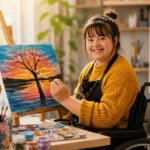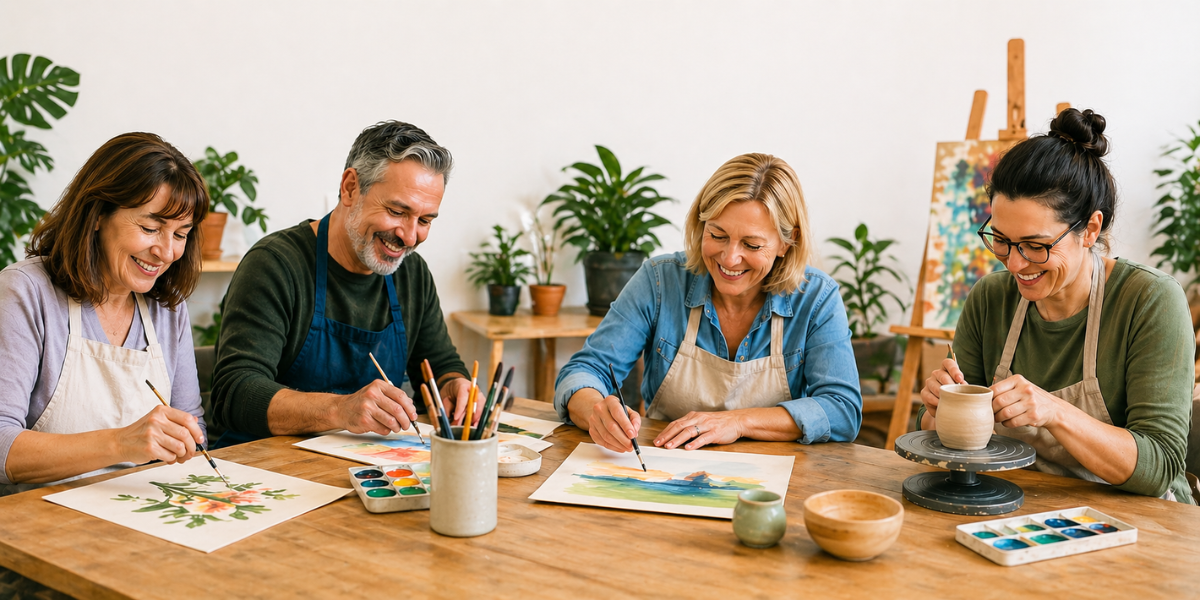
There is something quietly powerful happening in community halls, studio spaces, and local workshops across Australia. More adults than ever before are picking up paintbrushes, shaping clay, learning to sketch, or trying their hand at pottery for the very first time. And it is not just a passing trend.
If you have ever felt the weight of a stressful week and thought, “I wish I had something just for me,” you are not alone. Millions of adults are turning to creative workshops and art classes not because they want to become professional artists, but because they need an outlet, a community, and a way to feel alive again outside of work and responsibilities.
So what is really driving this shift? Let us explore the deeper reasons why adult creative learning is on the rise, and why now might be the right time for you to explore it too.
The Modern Life Problem Nobody Talks About Enough
People are working longer hours, spending more time on screens, and reporting higher levels of loneliness and burnout than in previous decades. According to the Australian Bureau of Statistics, one in five Australians experienced high levels of psychological distress in recent years. That is a sobering number.
Mental health conversations have opened up significantly, and people are actively seeking non-clinical, everyday ways to support their emotional well-being. Creative activities like painting, drawing, sculpting, and mixed media art have entered that conversation in a big way. This is one of the reasons why Adult Art Classes in Melbourne and similar programs are gaining attention as a practical, accessible outlet for stress relief. Research published in journals focused on health psychology consistently shows that engaging in creative activity reduces cortisol levels, the body’s primary stress hormone, and activates the brain’s reward system.
This is not just feel-good language. It is biology. When you make something with your hands, your brain enters a state similar to meditation. It slows the mental chatter and brings you into the present moment. Psychologists call this a “flow state,” and art classes are one of the most accessible ways to reach it regularly.
Why Adults Specifically Are Choosing Art Right Now
Children are expected to draw and paint. Adults are not, which is exactly why so many of them stopped. Somewhere between school and adulthood, many people absorbed the belief that art is only for the talented or the trained. That belief is now being challenged.
The rise of adult learning culture has shifted perceptions enormously. Online communities, social media platforms like Instagram and Pinterest, and the growth of wellness-focused content have normalised the idea of adults being beginners again. People are watching others try watercolour painting, linocut printing, or life drawing for the first time, and realising they can too.
Here are some of the most significant reasons adults are joining creative workshops today.
Stress Relief and Mental Health Benefits
The number one reason adults report joining art classes is stress relief. Occupational therapists, counsellors, and wellbeing coaches frequently recommend creative activities as part of a broader self-care routine.
Art therapy as a formal practice has grown in recognition, but even informal creative engagement, simply attending a community painting class on a Wednesday evening, delivers measurable well-being benefits. People report feeling calmer, more focused, and more positive after creative sessions. It gives the mind a genuine rest from problem-solving and digital overload.
This is especially relevant in a post-pandemic world where many adults discovered that their usual routines were not enough to sustain them emotionally. Art became a lifeline for many, and those habits have continued.
Social Connection and Community
Loneliness is one of the most underreported challenges facing adults today. Friendships often narrow as people move through their thirties, forties, and beyond. Work dominates social energy, and meaningful community can feel hard to find.
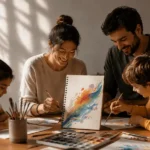
Creative workshops offer something rare: a shared experience that does not require small talk to feel meaningful. When you sit beside someone, and you are both figuring out how to mix a particular shade of green or shape a piece of clay on a wheel, a connection happens naturally. There is no pressure. There is laughter, encouragement, and a sense of belonging.
Many adults describe their weekly art class as the social highlight of their week. Not because it is glamorous, but because it is genuine. Group creative learning builds real relationships between real people, and that is increasingly hard to find in modern life.
A Desire for Screen-Free, Hands-On Experiences
There is a growing cultural movement pushing back against screen saturation. People are gardening more, cooking from scratch more, and yes, making art more. The appeal of holding a real paintbrush, feeling wet clay, or pressing ink onto paper is deeply physical in a way that no app or screen can replicate.
Adults are seeking tactile, embodied experiences as a form of restoration. Creative workshops deliver exactly that. They are tech-free zones where the only notification that matters is the one your hands give your brain when something starts to look right.
This trend toward slow living, mindfulness, and analogue creativity has driven enormous growth in art supply sales and studio enrolments across Melbourne and the rest of Australia.
Personal Growth and Lifelong Learning
There is a deeply satisfying feeling that comes from learning something new as an adult. It challenges the brain, builds confidence, and reminds you that growth is not limited to childhood or formal education.
Many adults join art classes specifically to develop a skill they never had the chance to explore earlier in life. Some are retirees with time and curiosity. Others are parents who have spent years focused on everyone else and are finally reclaiming something for themselves. Some are high-achieving professionals who need an area of life where being imperfect is not just acceptable but expected.
Creative skill-building engages neuroplasticity, the brain’s ability to form new connections throughout life. Learning to draw, paint, or sculpt genuinely rewires the brain to process visual information and spatial reasoning, and to develop patience. That is a powerful incentive beyond just the enjoyment of it.
The Confidence That Comes From Making Something Real
One of the most quietly transformative aspects of joining an art class is the moment you finish something and think, “I made that.” It sounds simple, but for many adults who spend their days in meetings, managing tasks, or caring for others, the act of creating something tangible with their own hands is deeply affirming.
Creative workshops teach adults to tolerate imperfection, to experiment without fear, and to trust their instincts. These are not just art skills. They are life skills. People carry that confidence back into their workplaces, their relationships, and their sense of self.
The Role of Accessible, Inclusive Workshop Culture
Art classes have also become far more welcoming in recent years. The old image of an intimidating fine art studio has largely been replaced by relaxed, inclusive spaces where absolute beginners are not just tolerated but celebrated. Workshop facilitators increasingly focus on the creative process over the finished product, creating environments where adults feel safe to explore without judgment.
This cultural shift in how workshops are run has removed one of the biggest barriers that kept adults away: the fear of not being good enough.
FAQ: Common Questions About Adult Art Classes
Q: Do I need any experience to join an adult art class?
A: No experience is needed at all. Most adult creative workshops are designed specifically for beginners and welcome people at every skill level.
Q: What types of art classes are popular with adults?
A: Watercolour painting, life drawing, pottery, printmaking, acrylic painting, and mixed media workshops are among the most popular choices for adults.
Q: How often should I attend to see real benefits?
A: Even attending once a fortnight can produce noticeable improvements in mood, focus, and creative confidence over time.
Q: Are art classes good for mental health?
A: Yes. Multiple studies in health psychology and occupational therapy support the link between regular creative activity and reduced stress, anxiety, and depression symptoms.
Q: What should I bring to my first class?
A: Most workshops provide materials. It is best to check with the organiser beforehand, but typically all you need is yourself and an open mind.
A Gentle Invitation
Whether you are searching for stress relief, creative expression, social connection, or simply something new to look forward to each week, adult art classes offer something genuinely valuable. You do not need talent. You do not need prior experience. You just need to show up.
If you are in Melbourne and curious about exploring a welcoming creative community, Artreach Collective offers a range of adult workshops across Melbourne designed for everyday people who simply want to make, connect, and grow.
The first brushstroke is always the hardest. After that, most people wonder why they waited so long.