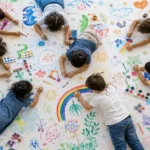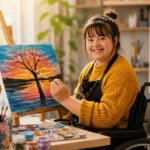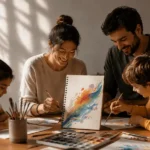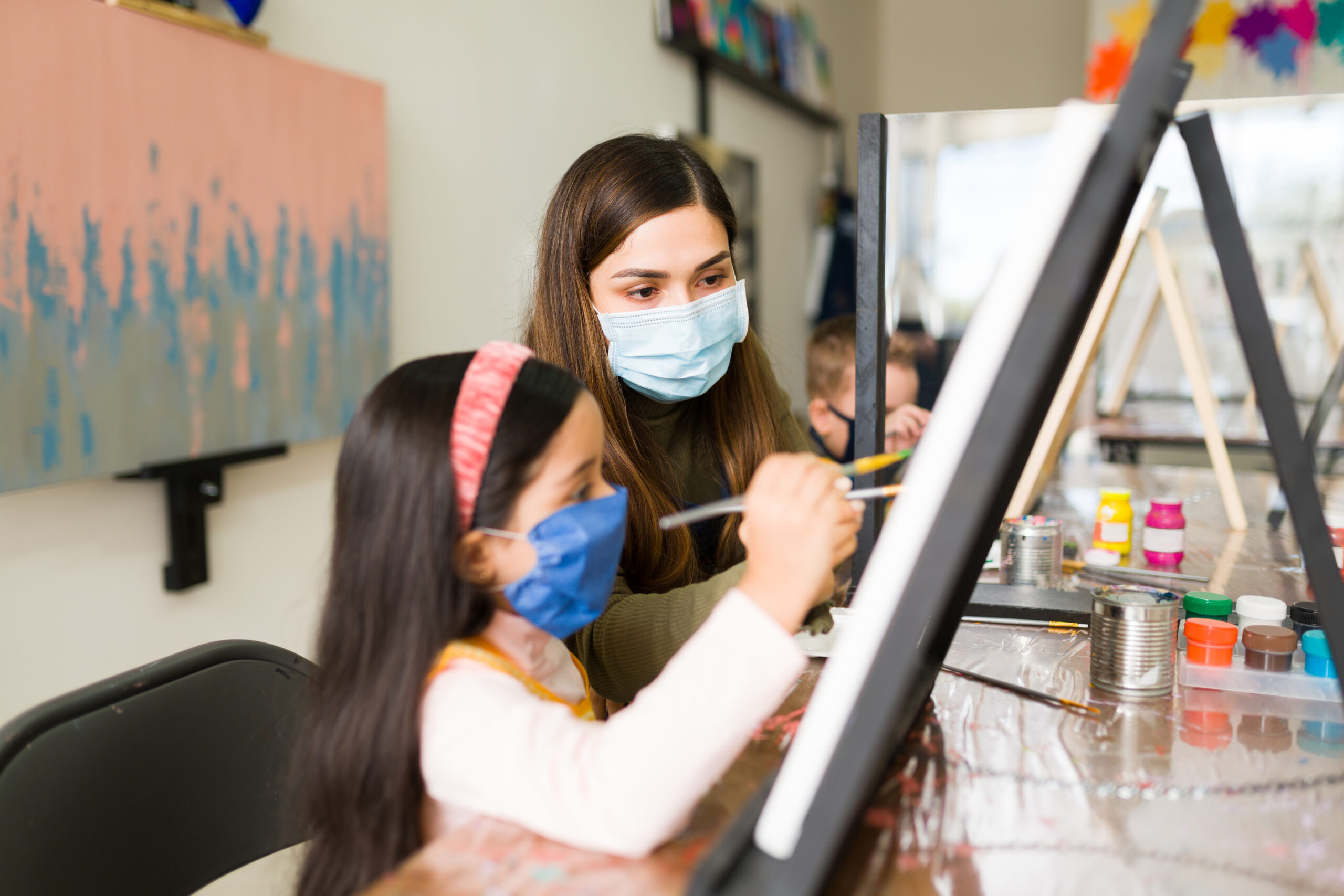
Here’s something that keeps me awake at night: we’re seeing more children struggling with anxiety, depression, and emotional overwhelm than ever before, yet many of them simply can’t – or won’t – talk about it. As a Mental Health Therapist working in Melbourne for over 15 years, I’ve sat across from countless kids who just stare at the floor when asked “How are you feeling?” But hand them a paintbrush or a lump of clay? Suddenly, everything pours out. Not through words, but through colour, texture, and form.
The question everyone’s asking – parents, teachers, school counsellors – is whether art therapy actually works, or if it’s just another expensive program that sounds good on paper. After two decades as a practicing artist and 15 years in mental health and disability support, I’ve seen both the remarkable breakthroughs and the frustrating limitations. So let’s cut through the hype and have an honest conversation about what art therapy can really do for children’s emotional growth in schools – whether you’re in Caulfield North or anywhere in Australia.
Why This Matters More Than Ever
If you’re a parent, teacher, or educator in Melbourne, you’ve probably noticed something: our kids are going through it. Post-pandemic anxiety, social media pressures, academic stress – it’s a lot. Traditional talk therapy doesn’t always work for children, especially younger ones who don’t yet have the vocabulary to express what’s happening inside. That’s where art therapy comes in, and honestly, it’s about time we had a proper conversation about whether it actually delivers on its promises.
I work from my home studio in Caulfield North, Melbourne, and I see this firsthand. But I’ll also admit where my understanding has limits – because let’s face it, every child is different, and what works here in Melbourne might look different in schools across.
What Exactly Is Art Therapy in Schools?
Before we dive deeper, let’s get clear on what we’re talking about. Art therapy isn’t just colouring-in time or a casual art class (though those have their own benefits). It’s a therapeutic approach that combines counselling techniques with creative processes. As a qualified Mental Health Therapist and member of the Australian Counselling Association (Level 2), I can tell you that proper art therapy involves trained professionals who understand both the artistic medium and the psychological framework.
In school settings, art therapy typically involves:
- Individual or small group sessions with a qualified art therapist
- Using drawing, painting, sculpture, or collage to express difficult emotions
- Creating a safe, non-judgmental space for self-expression
- Processing feelings through creative work rather than just words
The key difference? It’s intentional, guided, and therapeutic – not just arts and crafts.
The Evidence: What Research Actually Shows
Here’s where I need to be straight with you: the research on art therapy for children in schools is promising but not conclusive. A 2019 systematic review in the Journal of the Art Therapy Association found moderate evidence that art therapy can reduce anxiety and improve emotional regulation in children. But (and this is important) the studies often had small sample sizes and varied methodologies.
However, I’ll acknowledge my limitations here: most research I’ve accessed focuses on Western, primarily Australian contexts. How art therapy translates in schools, where educational systems, cultural attitudes toward mental health, and artistic traditions differ significantly, needs more exploration. What I can say is that creative expression is universal – humans have been using art to process emotions since we painted on cave walls.
Real-World Impact: What I’ve Observed
In my practice at Artreach Collective, I’ve worked with young people dealing with autism, disabilities, and mental health challenges. While I primarily work through NDIS-funded programs rather than directly in schools, the patterns I see are relevant.
One teen I worked with, let’s call her Maya, had severe anxiety that manifested in selective mutism at school. Traditional talk therapy felt like torture for her – imagine being asked to talk about your feelings when talking itself is the problem! Through art therapy, she began creating collages that expressed her internal world. Her teachers reported that as she gained confidence in expressing herself creatively, her verbal communication improved too.
But here’s the reality check: art therapy isn’t a quick fix. Maya’s progress took months. Schools operating on tight budgets and schedules might struggle to provide the consistent, long-term support that art therapy requires to be truly effective.
The School Implementation Challenge
This is where things get complicated. For art therapy to work effectively in schools, you need:
Qualified professionals: Not every art teacher is an art therapist, and not every counsellor understands creative processes. Proper training (like my three-year Masters in Counselling specialising in Creative Art Counselling from Swinburne University) is essential.
Dedicated space and time: Emotional breakthroughs can’t be rushed between maths and lunch. While schools in Caulfield North, South Yarra, or Brighton may have more resources, many under-resourced schools in regional Victoria struggle to prioritise wellbeing. Flexible creative approaches, including adult acrylic painting classes, can offer accessible emotional support when traditional spaces and time aren’t available.
Cultural sensitivity: This is huge. In my work, I draw on Western art therapy traditions and contemporary fine art training from Monash University, including Renaissance masters I studied in Italy. But a child from a different cultural background might need approaches that honour their artistic and emotional traditions.
Parental and administrative buy-in: Some parents and school administrators still see art therapy as “fluffy” compared to traditional academic interventions. Until we shift these attitudes, implementation will remain patchy.
Where Art Therapy Shines (And Where It Doesn’t)
Let me give you my honest assessment of where I think art therapy truly excels for children’s emotional growth:
The wins: Art therapy is particularly effective for children who’ve experienced trauma, those on the autism spectrum who process information visually, kids with anxiety who feel pressured by direct questioning, and students who struggle with verbal articulation. It provides a non-threatening entry point to discussing big emotions. Plus, there’s something inherently validating about creating something tangible – your feelings exist in physical form, which helps kids feel heard.
The limitations: Art therapy isn’t a substitute for crisis intervention. If a child is in immediate danger or crisis, they need immediate psychological support, possibly medication, and comprehensive care. Art therapy works best as part of a holistic approach, not in isolation. Also, some children simply don’t connect with creative expression – and that’s okay! We shouldn’t force it. And honestly, badly implemented “art therapy” (without proper training) can do more harm than good, making children feel their artwork is being “analysed” or judged.
The Teacher’s Perspective
I’ve spoken with several educators over the years, and they’re often the first to notice when a child is struggling emotionally. Many teachers in Melbourne suburbs have told me they can see the benefits of art therapy but feel overwhelmed adding another program to their already packed curriculum.
One primary school teacher from Caulfield shared: “I can see art therapy helps specific students, but I don’t have the training to facilitate it properly, and we don’t have funding for a dedicated art therapist.” This is the practical reality that tempers my enthusiasm – even when something works, it doesn’t matter if we can’t implement it.
Looking Forward: What Needs to Happen
For art therapy to truly fulfil its potential for children’s emotional growth in schools, several things need to change:
More research: We need larger, more diverse studies examining long-term outcomes. Particularly, we need research that includes various cultural contexts, including comprehensive studies everywhere.
Better training pipelines: Schools need access to qualified art therapists. This means university programs need to expand, and perhaps we need to develop tiered systems where trained teachers can deliver art-based interventions under supervision of qualified therapists.
Funding models: Whether through government education budgets, NDIS in Australia, or other funding mechanisms internationally, schools need sustainable ways to provide art therapy without it being a luxury only wealthy schools can afford.
Integration, not isolation: Art therapy should be part of a comprehensive mental health strategy in schools, working alongside counsellors, psychologists, teachers, and parents.
What’s Still Unclear (And That’s Okay)
Here’s what keeps me up at night: we don’t fully understand why art therapy works for some children and not others. Is it the creative process itself? The relationship with the therapist? The non-verbal nature of the expression? Probably all of the above, but the mechanisms aren’t entirely clear.
We also don’t have great data on long-term outcomes. Does a child who benefits from art therapy in Year 4 have better emotional regulation as a teenager? As an adult? These are questions we’re only beginning to answer.
And honestly, measuring emotional growth is messy. Unlike math scores or reading levels, emotional wellbeing doesn’t fit neatly into standardized tests. This makes it harder to “prove” art therapy’s effectiveness to skeptical administrators or policymakers – but the difficulty of measurement doesn’t mean the impact isn’t real.
My Final Thoughts
After years of working with children and young people across Melbourne’s mental health sector, I’ve seen how effective art therapy can be when delivered by qualified professionals. It isn’t a magic fix and works best alongside other supports, but when a child begins expressing deep fears through paint or processing trauma with clay, something meaningful shifts.
The real challenge is access whether families are in Caulfield North, Brighton, or nearby Melbourne suburbs, having a welcoming space that’s easy to reach makes a real difference, and you can find our art therapy location in Melbourne and get directions here before planning a visit. Children across Melbourne and Australia deserve tools to navigate their emotional worlds, and as art therapy continues to evolve across different communities, one thing remains clear: creative expression can unlock what words alone often cannot.
Frequently Asked Questions
Q: What’s the difference between art therapy and art classes?
A: Art therapy is led by qualified therapists with counselling training and focuses on emotional healing, not artistic skill. Art classes teach technique and creativity, while art therapy uses art as a tool to address specific mental health challenges.
Q: Does art therapy work for kids with autism or ADHD?
A: Yes, it’s often very effective. It provides non-verbal ways to communicate and can help with sensory regulation. Each approach is tailored to the individual child’s needs and works best as part of broader support.
Q: My child doesn’t like drawing. Will art therapy still help?
A: Definitely! Art therapy uses many mediums – clay, collage, digital art, even music. A good therapist will find what your child connects with. It’s about expression, not artistic talent.