Let’s be honest – we’re living in a time where our minds feel like they’re running a marathon every single day. Between work deadlines, family commitments, social media notifications, and the constant buzz of modern life, finding moments of genuine calm feels harder than ever. That’s probably why so many of us are turning to creative practices not just as hobbies, but as genuine tools for mental wellness.
Over the past few years, there’s been a noticeable shift in how people approach anxiety and focus issues. Rather than immediately reaching for apps or relying solely on traditional therapy, many folks are rediscovering something humans have known for thousands of years: making things with our hands and expressing ourselves creatively can genuinely change how we feel.
The Science Behind Creative Practice and Mental Health
Here’s what’s fascinating about creative activities – they actually change what’s happening in our brains. When someone sits down to paint, write, or sculpt, their brain enters what researchers call a “flow state.” This is that lovely feeling where time seems to disappear and worries fade into the background.
Studies from universities around the world have shown that creative activities can lower cortisol levels (that’s the stress hormone that makes us feel anxious). Even just 45 minutes of creative work can make a measurable difference. The American Journal of Public Health reviewed over 100 studies and found consistent evidence that creative expression improves mental health outcomes.
What makes this particularly interesting is that you don’t need to be “good” at art for it to work. The benefits come from the process itself, not the end result. That wonky pottery bowl or that slightly off-key painting still delivers the mental health goods.
Art Therapy: When Creativity Meets Professional Support
Art therapy takes creative practice to another level by combining artistic expression with therapeutic guidance. Unlike casual art-making, art therapy involves working with a trained professional who understands both the creative process and mental health.
In person counselling sessions that incorporate art therapy create a safe space where people can express feelings that might be difficult to put into words. Sometimes, picking up a paintbrush and letting emotions flow onto canvas reveals things that traditional talk therapy might miss.
The beauty of creative art classes in Melbourne is that it works on multiple levels. The creative process itself reduces anxiety, while the therapist helps you understand what your artwork might be communicating about your inner world. This combination can be incredibly powerful for people dealing with stress, trauma, or ongoing anxiety issues.
Mental health professionals across Melbourne have noticed significant improvements in clients who engage with art therapy. The hands-on nature of creating something tangible seems to ground people in the present moment, pulling them away from anxious thoughts about the future or regrets about the past.
Art Classes: Learning and Healing Together
While art therapy requires a trained professional, regular art classes offer their own unique benefits for managing anxiety and improving focus. There’s something special about showing up to a dedicated space, surrounded by others who are also there to create.
Art classes provide structure, which can be helpful for people whose anxiety makes it hard to start creative projects at home. When there’s a teacher guiding you through techniques and a set time to show up, the mental barrier to getting started disappears. You just need to arrive, and the rest flows from there.
Community art classes in Melbourne have become gathering places for people seeking both creative expression and connection. Unlike scrolling through art tutorials alone at home, being physically present in a class creates accountability and motivation. When you know others will be there, you’re more likely to show up, even on days when anxiety whispers that you should stay home.
The learning aspect matters too. Gaining new skills – whether that’s understanding colour theory, mastering brush techniques, or learning to work with clay – gives the mind something productive to focus on. This focused learning naturally crowds out anxious thoughts and rumination.
The Power of In-Person Connection
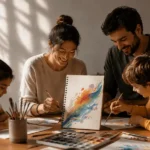
Here’s something that online classes and tutorials can’t quite replicate – the energy of creating alongside others in the same physical space. In person art experiences offer a level of connection and presence that video calls just don’t match.
When working in a shared studio or classroom, there’s an unspoken support that happens. Seeing someone else struggle with getting their proportions right, watching how someone else approaches colour mixing, or simply sharing a laugh when paint ends up somewhere unexpected – these moments create bonds and normalize the creative process.
For people dealing with anxiety, social isolation often makes things worse. In person counselling and art classes break that isolation in gentle ways. You don’t have to share your deepest fears with classmates, but the simple act of being around others who are also showing up for their wellbeing creates a sense of community.
In Artreach Collective in Melbourne we understand this deeply. Their approach combines the therapeutic benefits of creative practice with the healing power of human connection, creating spaces where people feel safe to explore, experiment, and express themselves.
Painting and Drawing: Accessible Tools for Everyone
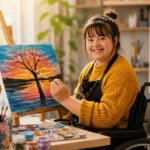
Among all creative practices, painting and drawing remain some of the most accessible and immediately beneficial for anxiety relief. The materials are simple – paper, pencils, paints – and the learning curve is gentle enough that anyone can start today.
What makes painting particularly effective is how it engages multiple senses simultaneously. The visual focus of choosing colours, the tactile sensation of brush on canvas, even the smell of paints – all of this pulls you firmly into the present moment. That’s essentially what mindfulness is, but achieved through creative expression rather than meditation.
Drawing exercises the brain differently than most daily activities. When sketching an object, you’re truly observing it, noticing shapes, textures, and details that often go unseen. This focused attention gently brings the mind into the present moment, calming anxious thoughts that usually rush toward future worries. That’s why drawing classes for adults can be especially helpful, offering a structured yet relaxing space to slow down, build awareness, and reconnect with creativity in a meaningful way.
Many mental health professionals now incorporate simple drawing exercises into their practice. Even basic activities like doodling or colouring have been shown to reduce stress markers and improve focus. The repetitive hand movements combined with creative decision-making seem to hit a sweet spot for anxiety relief.
Structured Sessions Versus Open Studio Time
Both structured art classes and open studio sessions offer benefits, but they work slightly differently for anxiety management. Structured classes provide clear direction, which helps when decision-making feels overwhelming. A teacher guides you step-by-step, removing the paralysis that sometimes comes with a blank canvas.
Open studio time, on the other hand, offers freedom to follow your creative instincts without pressure or judgment. For some people, this unstructured approach feels liberating and allows deeper self-expression. There’s no right or wrong – it depends on what your anxiety needs at that moment.
Many community art spaces across Melbourne now offer both options, recognizing that different people (or even the same person on different days) need different approaches. Some days you want guidance and structure; other days you need the freedom to splash paint however feels right.
The Role of Regular Practice
Here’s where things get real – creative practices work best when they’re regular habits rather than occasional activities. Think of it like physical exercise for your mental health. One yoga class helps, but a consistent practice transforms.
Attending weekly art classes creates rhythm and routine, which itself can be calming for anxious minds. Knowing that every Tuesday evening is your painting time gives you something to look forward to and creates structure in your week.
The consistency also builds skill over time, and there’s something deeply satisfying about watching your abilities grow. That sense of progress and accomplishment counters the helplessness that often accompanies anxiety. You can look at your artwork from three months ago and clearly see improvement – tangible evidence that effort leads to growth.
Combining Creative Practice with Professional Support
For people experiencing ongoing anxiety, combining regular creative practice with in-person counselling often provides the most well-rounded support. Counselling creates a safe space to explore deeper concerns, while creative activities offer everyday tools for emotional regulation. This balanced approach is commonly reflected in art therapy Melbourne programs, where mental health care is treated as more than just talking.
This integrated approach recognizes that mental health isn’t one-dimensional. Sometimes you need to talk things through with a professional. Sometimes you need to paint out your feelings. Sometimes you need to sit quietly in a studio, focused on mixing the perfect shade of green while your nervous system settles down.
Therapists who understand creative practices can help clients use art-making as both a coping tool and a form of self-expression. They might suggest keeping a visual journal, trying specific art exercises when anxiety spikes, or bringing artwork to sessions to explore what emotions or thoughts emerged during creation.
What Makes Melbourne’s Art Community Special
Melbourne has developed a particularly vibrant community around therapeutic art practices. The city’s long-standing appreciation for arts and culture has created an environment where creative wellness isn’t seen as fringe or alternative – it’s simply part of how people take care of themselves.
Local art studios and community centers across Melbourne neighbourhoods offer everything from drop-in painting sessions to structured art therapy programs. This accessibility means that engaging with creative practice doesn’t require extensive planning or travel – there’s likely something nearby.
The diversity of offerings matters too. Whether someone prefers working with watercolours, acrylics, clay, or mixed media, they can find classes and spaces that match their interests. This variety helps people discover which creative practices resonate most strongly with them.
Breaking Down Barriers to Starting
Despite growing awareness of creative practices’ benefits, many people still hesitate to start. Common concerns include thinking they’re not artistic enough, worrying about costs, or feeling self-conscious about creating in front of others.
Here’s the truth: art classes focused on wellbeing are specifically designed for beginners. The goal isn’t producing gallery-worthy pieces – it’s the experience of creating and the mental health benefits that come with it. Teachers in these settings understand that and create welcoming environments where experimentation is encouraged and “mistakes” are just part of learning.
Cost can be a legitimate concern, but many community organizations offer sliding scale fees or drop-in sessions at reasonable rates. Some mental health programs now recognize creative therapies and may provide support for accessing these services.
The self-consciousness tends to fade quickly once you’re actually in a class. Everyone is focused on their own work, and there’s usually a supportive rather than competitive atmosphere. Plus, struggling with a painting technique alongside others often leads to bonding rather than judgment.
Beyond the Canvas: Life Skills from Art Practice
Interestingly, the benefits of creative practice extend beyond the art room. Skills developed through painting, drawing, or other creative activities often transfer to daily life in unexpected ways.
Art teaches patience – you can’t rush certain processes, and learning to sit with that discomfort builds tolerance for uncertainty in other areas. It teaches problem-solving – when a painting isn’t working, you learn to step back, reassess, and try different approaches. These are exactly the skills that help manage anxiety in everyday situations.
Creative practice also builds self-trust. When you make decisions about colours, compositions, or techniques and see them work out (or not work out, learn, and try again), you strengthen your confidence in your own judgment. For people whose anxiety makes decision-making difficult, this can be genuinely transformative.
What We Still Don’t Fully Understand
Being completely honest here – while evidence strongly supports creative practices for mental wellness, we’re still learning about the details. Individual responses vary significantly. Some people find immediate relief from anxiety through art-making, while others need weeks of regular practice before noticing changes.
The relationship between different art forms and different types of anxiety isn’t fully mapped out either. Does painting work better than sculpture for certain conditions? Do some people respond better to group classes while others need individual sessions? Research continues, but personalized approaches seem most effective.
There’s also ongoing discussion about when creative practice alone is sufficient versus when professional therapeutic support is needed. The general consensus is that creative activities are wonderful for managing everyday stress and mild anxiety, but more significant mental health challenges benefit from professional guidance.
Looking Forward: The Future of Creative Wellness
The integration of creative practices into mainstream mental health support seems likely to continue growing. More therapists are incorporating art-making into their practice, and more people are seeking out these combined approaches.
Technology might play an interesting role – virtual reality art experiences, online classes with local pick-up of materials – but the fundamental value of in person connection and hands-on creating will likely remain central. There’s something about physically showing up to a space, being around others, and working with tangible materials that digital experiences can’t quite replicate.
What’s particularly exciting is seeing creative wellness practices becoming more inclusive and accessible. Recognition that these aren’t luxuries but legitimate mental health tools is opening doors for more people to access them.
Final Thoughts
After exploring this topic deeply, what stands out is how art and creativity offer something uniquely valuable for our overwhelmed, anxious modern minds. We’ve built a world that prioritizes productivity and efficiency, often at the cost of play, expression, and simple making.
Creative practices invite us back to something fundamental – the human need to make marks, shape materials, and express what’s inside us. The fact that this also happens to reduce anxiety and improve focus feels like a beautiful alignment of enjoyment and wellbeing.
The combination of regular art classes, supportive in person environments, and when needed, professional therapeutic guidance, creates a comprehensive approach to managing anxiety. It’s not about choosing between traditional therapy and creative practice – they work beautifully together.
For anyone feeling overwhelmed by anxiety or struggling to focus, taking that first step into an art class or therapy session can feel daunting. But the people showing up to these spaces aren’t artists – they’re regular folks looking for relief, connection, and maybe a bit of joy in the process of creating something with their own hands.
The future of mental wellness likely includes more integration of creative practices, more recognition of their value, and more accessible pathways for people to engage with them. Until then, the invitation is simple: pick up a brush, show up to a class, allow yourself the gift of creative expression. Your anxious mind might just thank you for it.
Frequently Asked Questions
Q: How often should art classes be attended for mental health benefits?
A: Weekly sessions provide consistent structure and rhythm, though even monthly classes combined with home practice can be beneficial.
Q: Is art therapy different from regular art classes?
A: Yes. Art therapy involves a trained therapist who helps process emotions through artwork, while art classes focus on skill-building and creative expression in a supportive environment.
Q: Can creative practices replace traditional counselling for anxiety?
A: They work well together but serve different purposes. Creative practices are excellent daily tools, while professional counselling addresses underlying issues and provides clinical support.
Q: What if someone has no artistic experience or talent?
A: The benefits come from the creative process itself, not skill level. Beginner-friendly classes welcome everyone regardless of previous experience.